Most explanations of B2B vs B2C marketing start with the same list: B2B has longer sales cycles, more decision-makers, higher-value deals. B2C is faster, more emotional, driven by impulse. All of that is true, and none of it is the difference that should change how you run a marketing program. The difference that actually matters is what your reporting can see, not who is buying.
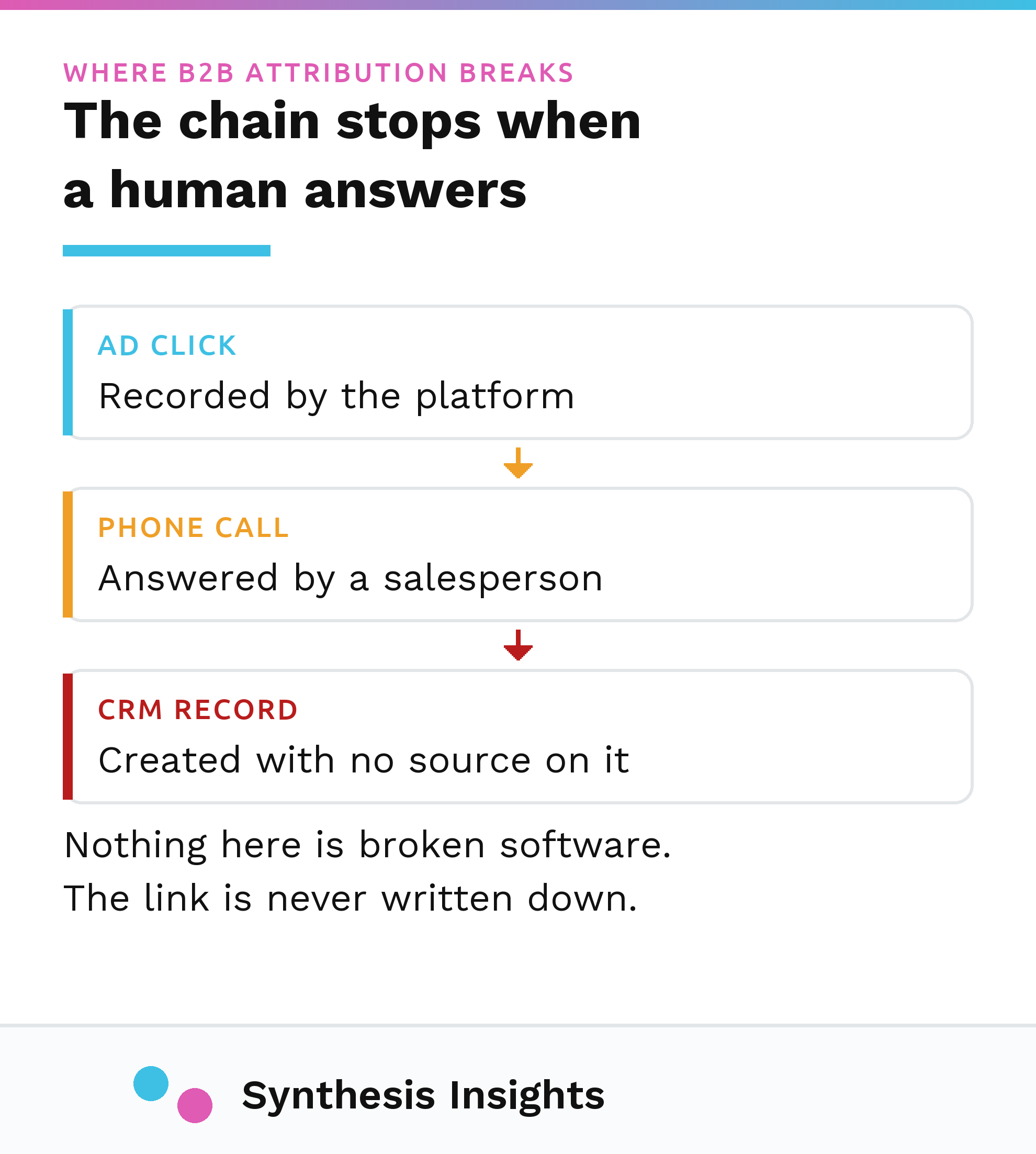
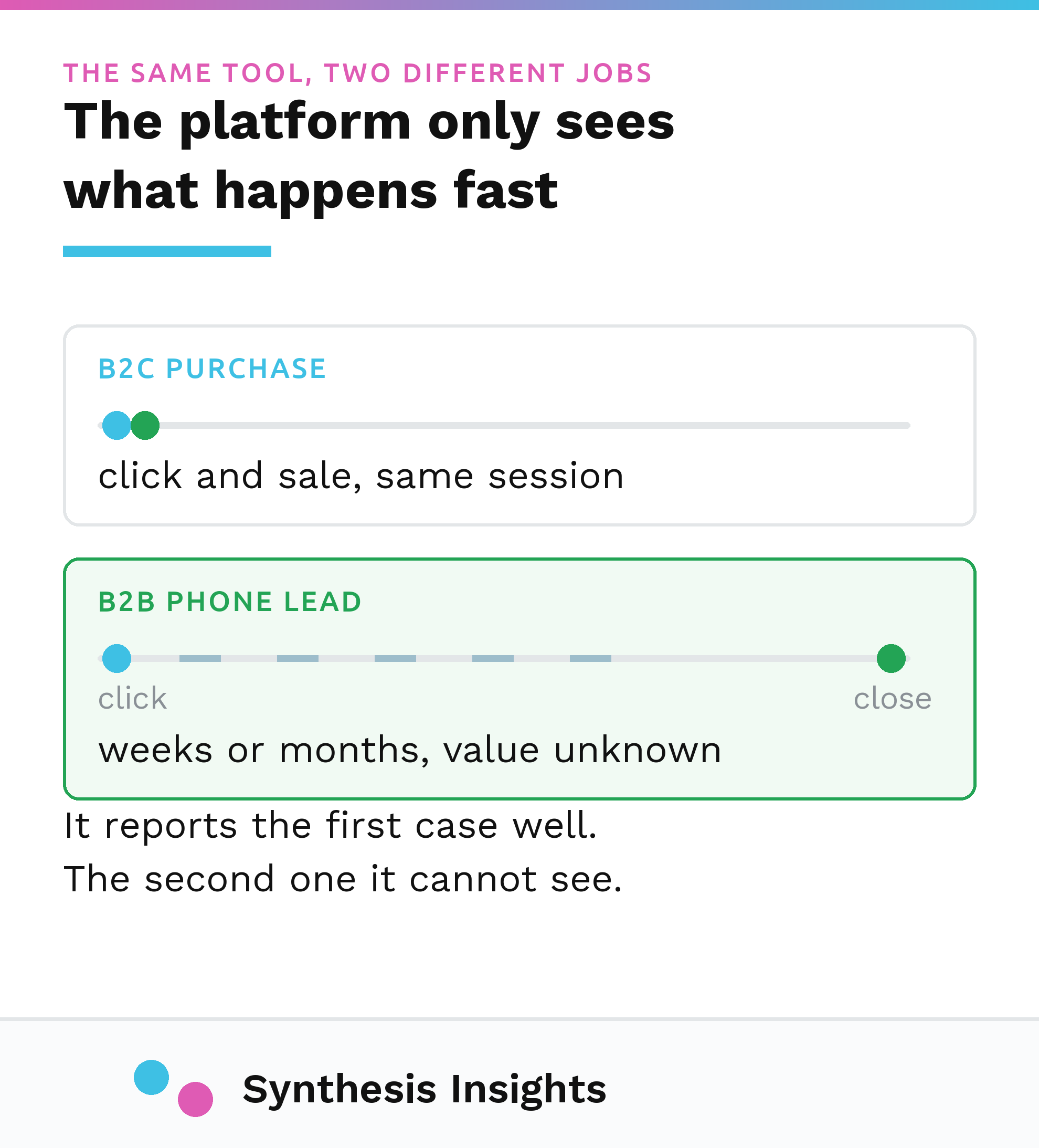
In B2C, the click and the purchase happen close enough together that the ad platform's own numbers are close enough to the truth. Someone clicks an ad, buys a pair of shoes, and the platform logs a conversion that matches what actually happened. In B2B, a person answers a phone, a salesperson works the deal for months, and the only system that knows whether it turned into revenue is the CRM. The ad platform was never built to see that part, and it doesn't.
I found out exactly how large that gap can get on an industrial manufacturer's paid search account. Phone-call leads were landing in the CRM with no source attached to them. Sales worked those calls and some of them closed, but none of that revenue counted toward paid search, so the program was being judged on a lead number that was too low, and every budget decision built on top of that number was slightly wrong.
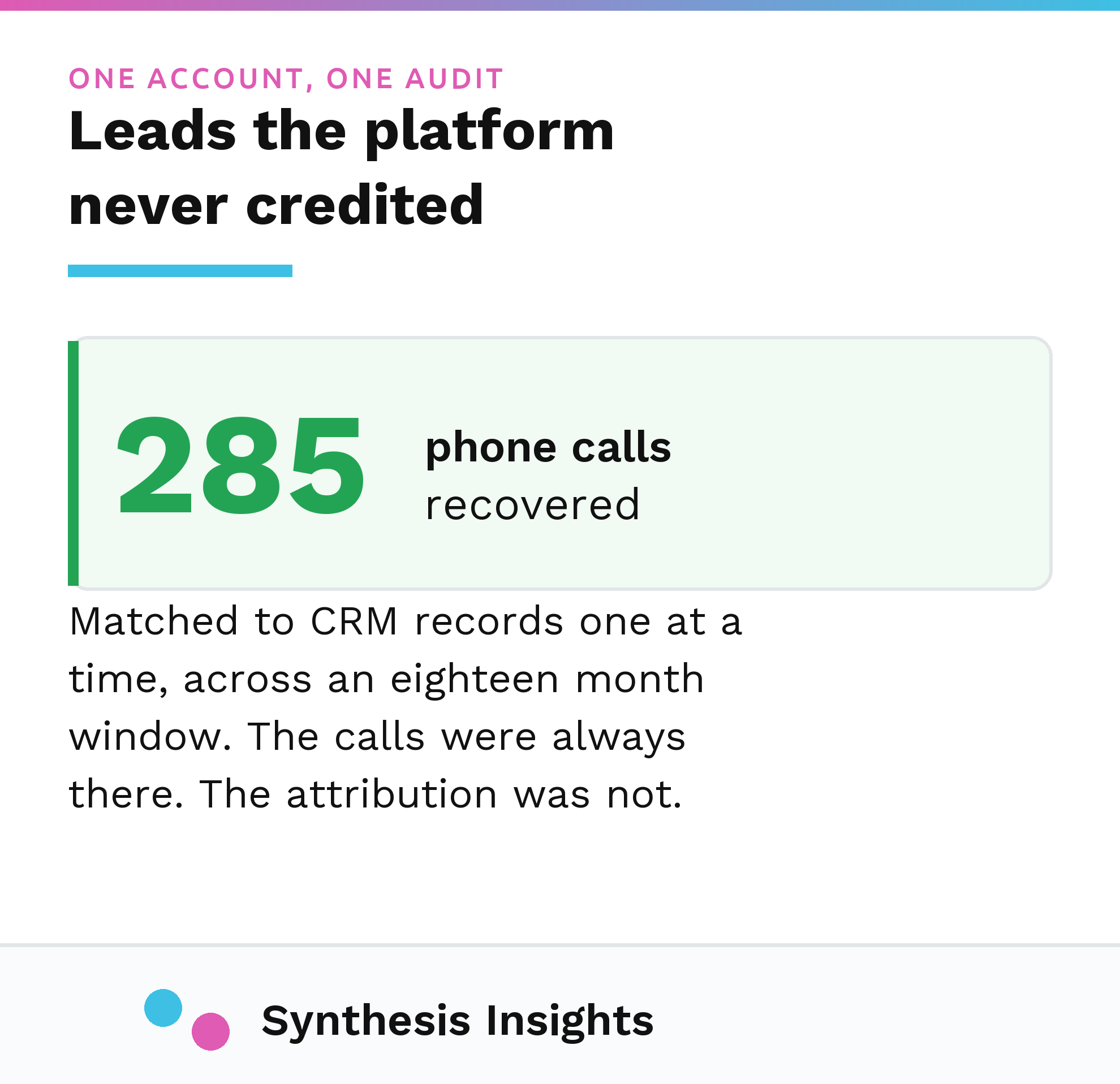
What I did was pull the call records out of the advertising platform and match them against CRM records by area code and timestamp, one call at a time, across an eighteen-month window. In an audit I ran, 285 calls got recovered and re-attributed to paid search. They had been sitting there the whole time, real conversations with real buyers, just disconnected from the thing that produced them.
Business-to-business marketing refers to the promotion of products or services from one company to another, as distinct from business-to-consumer marketing, which sells directly to a person buying for their own use. That distinction is straightforward. What isn't straightforward, and what most comparisons skip, is that the two also produce completely different relationships between what an ad platform reports and what actually happened.
Why the platform doesn't know
Google Ads counts a phone call as a conversion based on how long it lasts, not on whether it turned into a sale. You set a minimum call length, and every call that clears it counts. Google's own documentation on phone call conversion tracking states that "every call that lasts at least that long is counted as a conversion" once you set that threshold. That's a workable proxy when the decision happens fast: a long call to a pizza place probably means an order got placed. It tells you nothing about whether a plant manager who called in about a quote bought six months later.
Google does have a way to close that gap. Its offline conversion imports documentation describes reporting on Google-generated leads that get "further qualified offline (outside of Google Ads) in your customer relations management (CRM) system." That import has to be built: someone has to tie a lead identifier to a CRM outcome and push the result back to the platform on a schedule. On the account I audited, it hadn't been. The calls existed inside the platform's own call reporting. They just never got connected to what sales did with them afterward.
What this means if you run a B2B account
I manage paid media for B2B manufacturers, and this is the reason the CRM is the only source I trust for whether a program is working. The ad platform's dashboard isn't lying, exactly. It's answering a narrower question than the one you're actually asking. It can tell you a call happened and how long it lasted. It cannot tell you whether that call turned into a purchase order four months later, because that fact doesn't live inside the ad platform at all.
What I'd expect on other B2B accounts with a meaningful volume of phone leads, though I have only audited this one closely enough to put a number on it, is some version of the same shape of problem. Anywhere a human being takes the lead offline (a phone call, a form that routes to a sales rep, a trade show scan) the ad platform's record of what happened stops being reliable the moment the conversation leaves the platform. B2C rarely has this problem because so much of the B2C purchase still happens inside the platform's own view: add to cart, checkout, done.
The actual difference
B2B vs B2C marketing isn't really a contest between two audiences with different moods. It's a contest between two different relationships to the truth. B2C reporting is usually close enough to reality that you can trust the dashboard. B2B reporting requires you to go check, because the moment a lead becomes a conversation between two humans, the platform's job is done and the CRM's job has just started.
That's also why how I report to clients starts from CRM outcomes rather than platform metrics, and why the recovered-lead work above is one of the examples on the results page. If your account runs on phone leads, form fills that go to a human, or any sales process longer than a single session, the question worth asking isn't which channel gets credit inside the platform. It's whether anyone has gone back to the CRM to check what the platform missed.
If you want a second set of eyes on whether your reporting matches what's actually closing, get in touch.