A B2B keyword is a search term a business buyer uses while researching, comparing, or evaluating a solution to a work problem. A complete B2B keyword strategy has two layers: the research that finds those terms, and CRM verification that the terms actually produce a business outcome. Most strategy advice stops after the first layer, and that gap is what the rest of this page addresses.
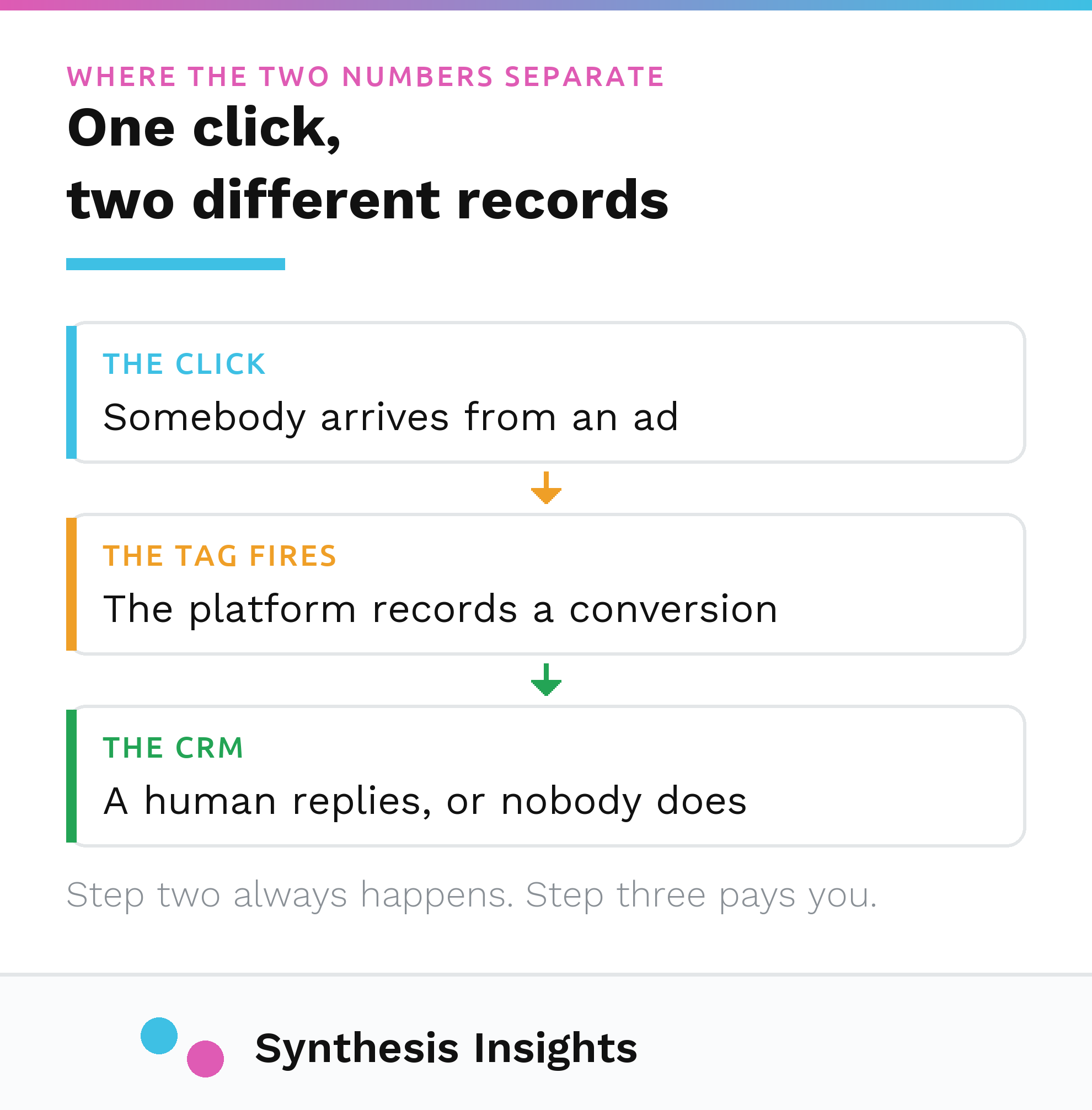
B2B keyword strategy advice tends to stop at finding the right words: research volume, group by intent, assign a keyword to a page, track rankings. That gets you a list. It does not tell you whether the keywords on that list are actually producing customers, because the number you are using to judge them, the conversion count sitting in your ad platform or your rank tracker, is not a verified business outcome. It is a tag firing.
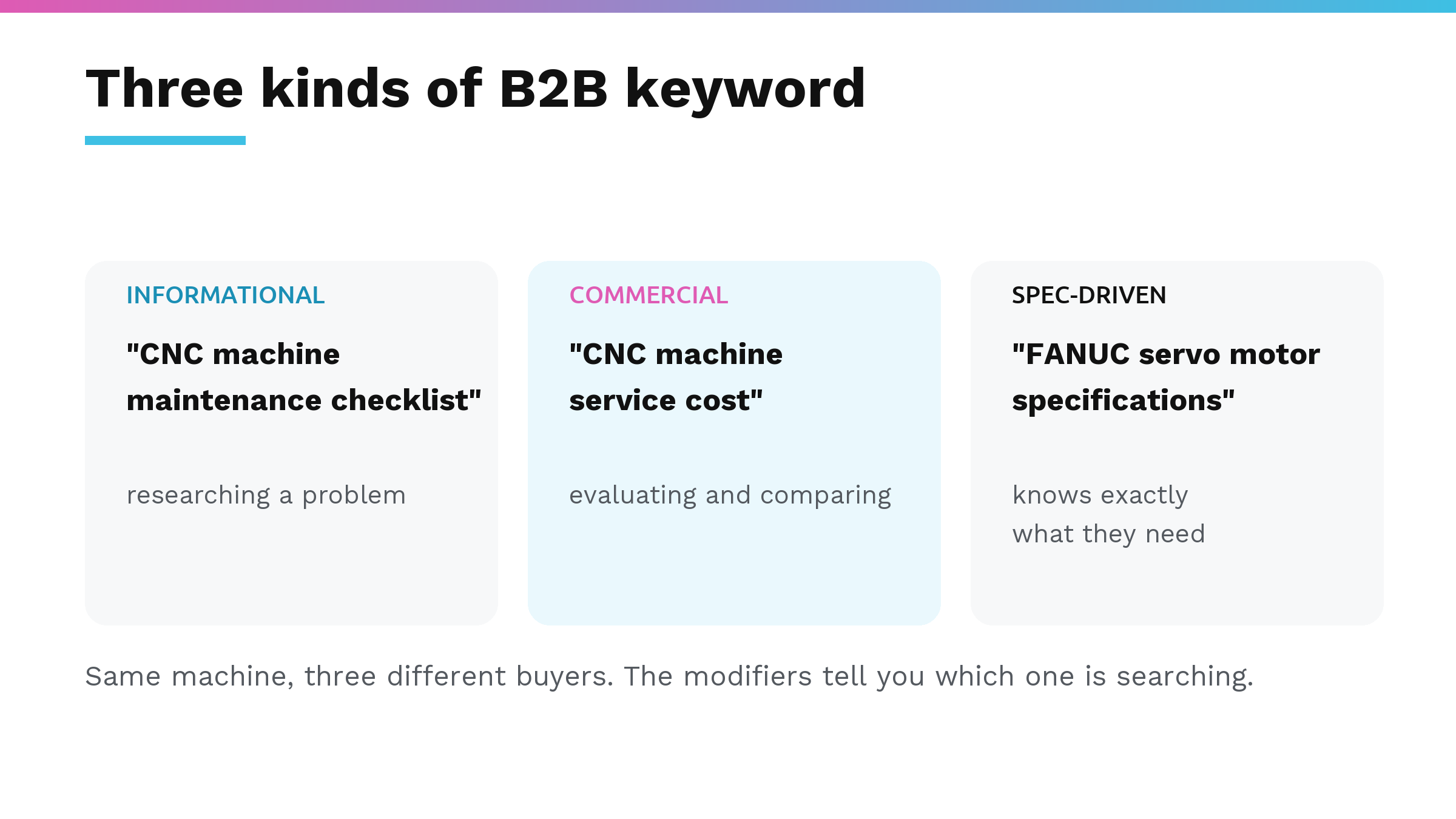
That distinction sounds pedantic until you watch it cost real money. I ran into it on an industrial equipment manufacturer's account this year. Comparing the platform's own conversion counts against verified CRM leads for the same three months, May through July 2026, one platform overstated real leads by 63%. The other overstated them by 44%. Same account, same window, two different platforms, two different amounts of fiction.
What counts as a B2B keyword
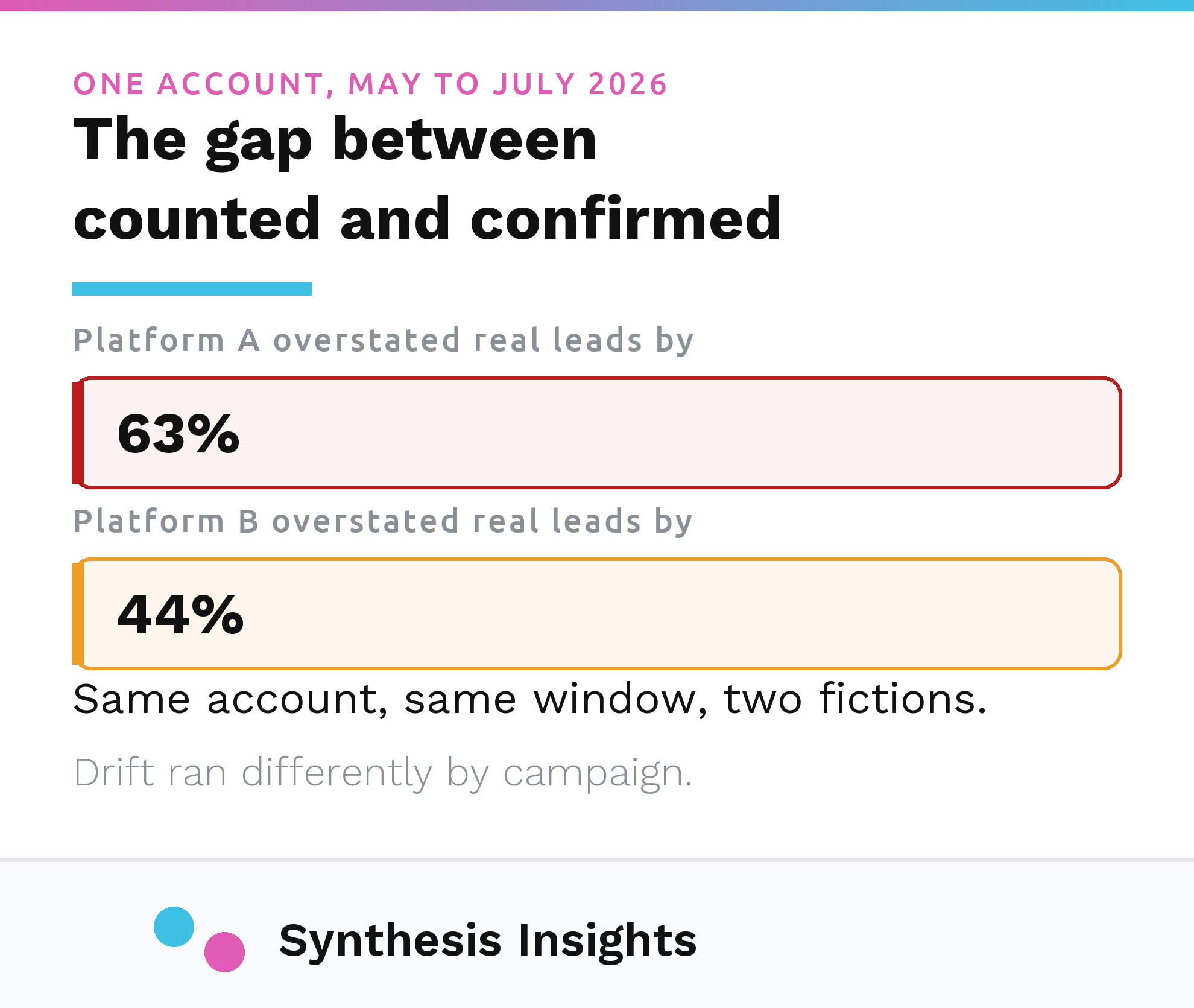
What matters is who is searching and why. A phrase like "CNC machine maintenance checklist" signals a buyer researching a problem (an informational term). A search for "CNC machine service cost" signals evaluation and comparison (a commercial term). And "FANUC servo motor specifications" comes from a buyer who already knows exactly what they need, right down to the part number or technical designation. These same keyword categories, informational, commercial, and spec-driven, form the backbone of a paid-search campaign structure, the way I lay it out in B2B PPC for lead generation. Getting the categories right matters because the modifier attached to a term is what tells you which stage of the buying process the search came from.
Why the platform number and the real number diverge
Google is explicit about this, if you read past the dashboard. Its own documentation on conversion tracking describes the mechanism plainly: a cookie is set when someone clicks or views your ad, and when they complete the action you defined, "our system recognizes the cookie... and we record a conversion." That is a description of a tag firing on a browser event. It says nothing about whether the person behind that browser event turned into a sales conversation, and Google's conversion tracking documentation does not claim it does.
Google also publishes a straight answer for why its own conversion count won't match the numbers in your other systems. Its discrepancy guide lists several reasons: conversions get attributed to the click or impression date rather than the date the action happened, invalid traffic gets stripped out after the fact (which quietly lowers historical counts), lookback windows differ between tools, and some platforms count every conversion while others count one per interaction. None of that is a bug, just a different definition of "conversion" than the one your sales team uses when a lead actually replies to an email.
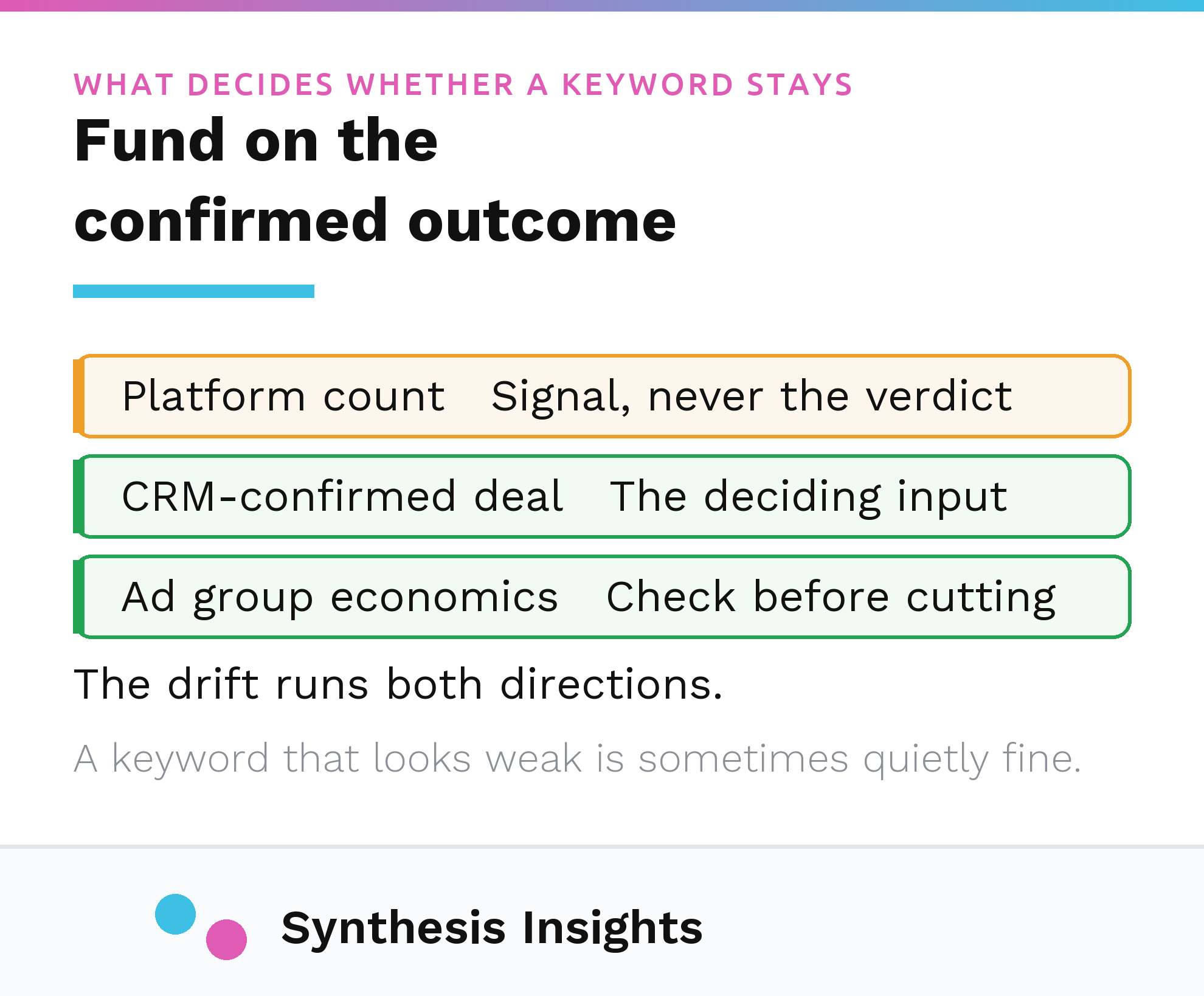
On the account above, the drift did not run one direction. It was not simply "the platform inflates everything by the same amount," which would at least make the number correctable with a discount rate. It ran differently by platform and, within that, differently by campaign. Some keywords that looked strong on the dashboard were producing plenty of tag fires and comparatively few real conversations. Others that looked weak were quietly fine. There is no single correction factor you can apply across an account and trust.
Two layers a B2B keyword strategy needs
None of this argues against keyword research, and the problem only starts when you stop there. A workable B2B keyword strategy has two layers, and most of what gets written online only covers the first.
Layer one is standard, and still necessary. Understand who is actually searching and why. B2B search behavior is different from consumer search: fewer people search, the same phrase can mean a technical buyer, a procurement officer, or an end user depending on the query modifier, and the buying cycle behind a single keyword can run months longer than a consumer purchase. The grouping that matters is where the searcher sits in that cycle, which topic labels alone will not tell you. "Conveyor belt splicing equipment" is a different intent than "conveyor belt splicing cost." Assign keywords to existing pages before creating new ones, and only build new pages for gaps that group research actually turned up.
Layer two is the part that gets skipped. Before you decide a keyword or a campaign is working, or before you cut one as waste, check what happened after the platform recorded the conversion. Did the lead reach the CRM. Did it turn into a real deal, or at least a real conversation. Look at the containing ad group's economics before you judge the individual keyword's platform-reported conversion count, since a keyword can look wasteful in isolation while the group around it is healthy. I've written before about how the same trap catches accounts trying to trim negative keywords off the platform's word alone. It's the same mistake wearing a different hat. If a keyword strategy is built entirely on numbers the ad platform reports about itself, it is a strategy built on the platform grading its own homework.
Tracking it without fooling yourself
Set up tracking that ties a keyword or campaign back to a CRM record, not just a form-fill event. Google Search Console and Google Analytics tell you what people searched and clicked. They do not tell you what your sales team closed. This is where a lot of B2B conversion-rate work quietly fails, because traffic and closed revenue get judged by different signals. If those two views regularly disagree by double digits, that gap tells you something about which keywords are actually worth funding, and averaging it away as a rounding error is how good keywords get cut by mistake. This is the check I build into how I manage paid search accounts, and it's the same discipline behind the outcomes I can actually show on the results page.
The account with the 63% and 44% gaps did not have a tracking failure in the sense of anything being broken. Every pixel fired correctly. The problem was treating a correctly firing pixel as proof of a sale. In a B2B keyword strategy that skips the CRM check, the error sits in what a conversion is taken to mean, well upstream of the keyword list, and it stays invisible until someone goes and checks.