Inbound marketing made one promise: publish something genuinely useful and buyers find you on their own, instead of you interrupting them with a cold call or a bought list. That promise is still correct. What's changed is the page it was built on top of.
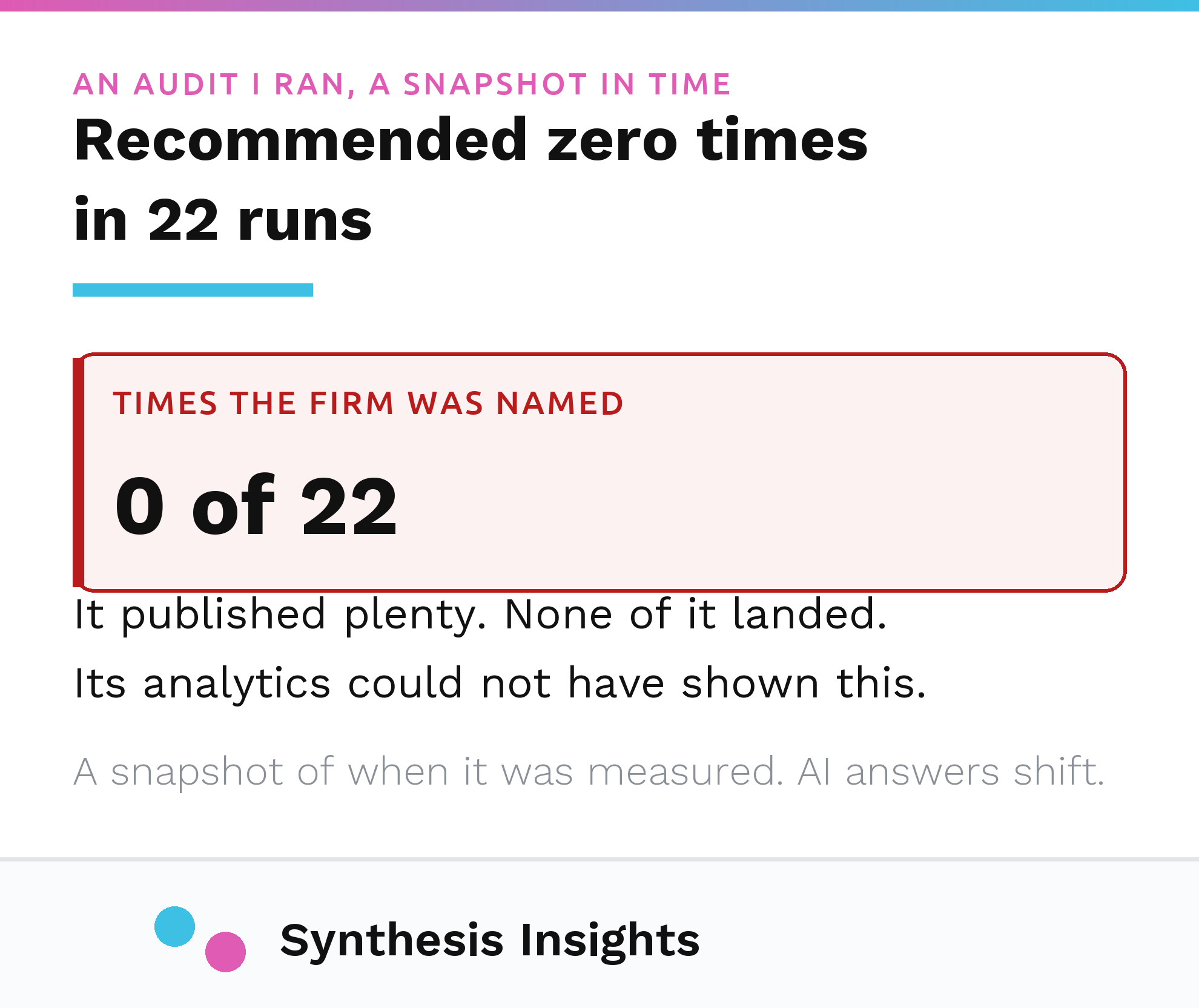
Inbound assumed a search results page. You wrote the guide, Google indexed it, someone searched the question, your link showed up, they clicked through and read your answer on your site. Every part of that chain, publish, index, rank, click, was something you could watch happen and measure. HubSpot's own description of the methodology still frames it that way: inbound "pulls people in with content that solves their problems and answers their questions at every stage of the buyer's journey".
That chain now has a broken link in the middle. A growing share of buyer questions get answered inside an AI assistant, and there's no results page and no click. Pew Research tracked actual browsing behavior on 68,879 Google searches in March 2025 and found that when an AI summary appeared, people clicked a traditional search result in 8% of visits, versus 15% when no summary appeared, roughly half the rate. Your content can be excellent, indexed, and even accurate inside the AI's own knowledge of you, and the buyer never sees it, because they never left the chat window.
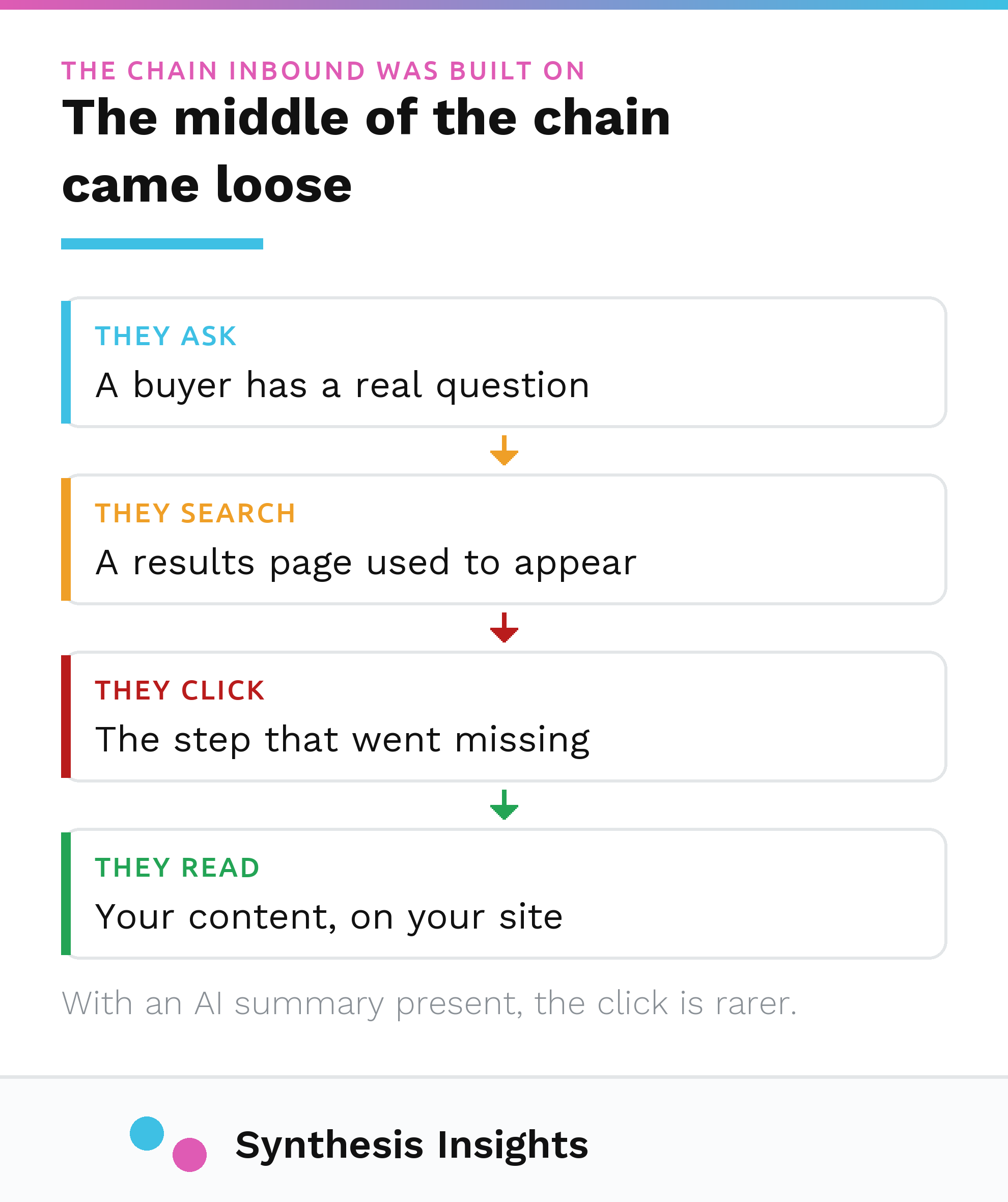
I ran an AI presence audit on a design and architecture firm that had been doing the inbound basics for years: real articles, a real blog, real effort. Across 22 runs asking AI engines the kind of question a buyer would actually type when shopping for that kind of firm, the audit found the firm recommended zero times. That's a measurement, not a verdict on the work, and it's a snapshot. AI answers shift as models update and as competitors publish more of what those engines pull from, so the same audit run again next quarter could read differently. But the number on the day it was measured was zero, and nothing in Google Search Console or Google Analytics would have shown that gap, because those tools only see the traffic that reaches your site. They have no visibility into a question that got fully answered somewhere else.
That's the part inbound's original promise didn't account for. "Publish something useful" was never wrong. It just quietly assumed the useful thing would get seen by the people asking. When the answer happens off your site, being useful and being invisible can both be true at the same time.
What inbound still gets right
None of this makes inbound obsolete. The core insight, that buyers trust content which actually answers their question more than they trust an ad interrupting them, holds up fine whether the answer is delivered by a search results page or an AI assistant. If anything it gets more important: AI engines are themselves reading and synthesizing content to build their answers, so having genuinely useful material out there is still the raw material the whole system runs on.
What inbound has to add, to stay honest to its own promise, is a second habit next to the first one. The first habit is writing content that answers the real question a buyer has, not the question that's easiest to rank for. The second, newer habit is checking whether you're actually the answer when someone asks, in the place buyers increasingly ask. Content quality and citation are two different things now, and only one of them is visible in your existing dashboards.
Where the two habits actually connect
The connection isn't abstract. If you're already doing the work of understanding what your buyers actually ask, at each stage of a purchase decision, that same list of questions is what you'd run through an AI engine to see who gets named. The research you'd do to write a genuinely useful article is close to identical to the research you'd do to check your own visibility in AI answers. Treating them as separate projects wastes the overlap.
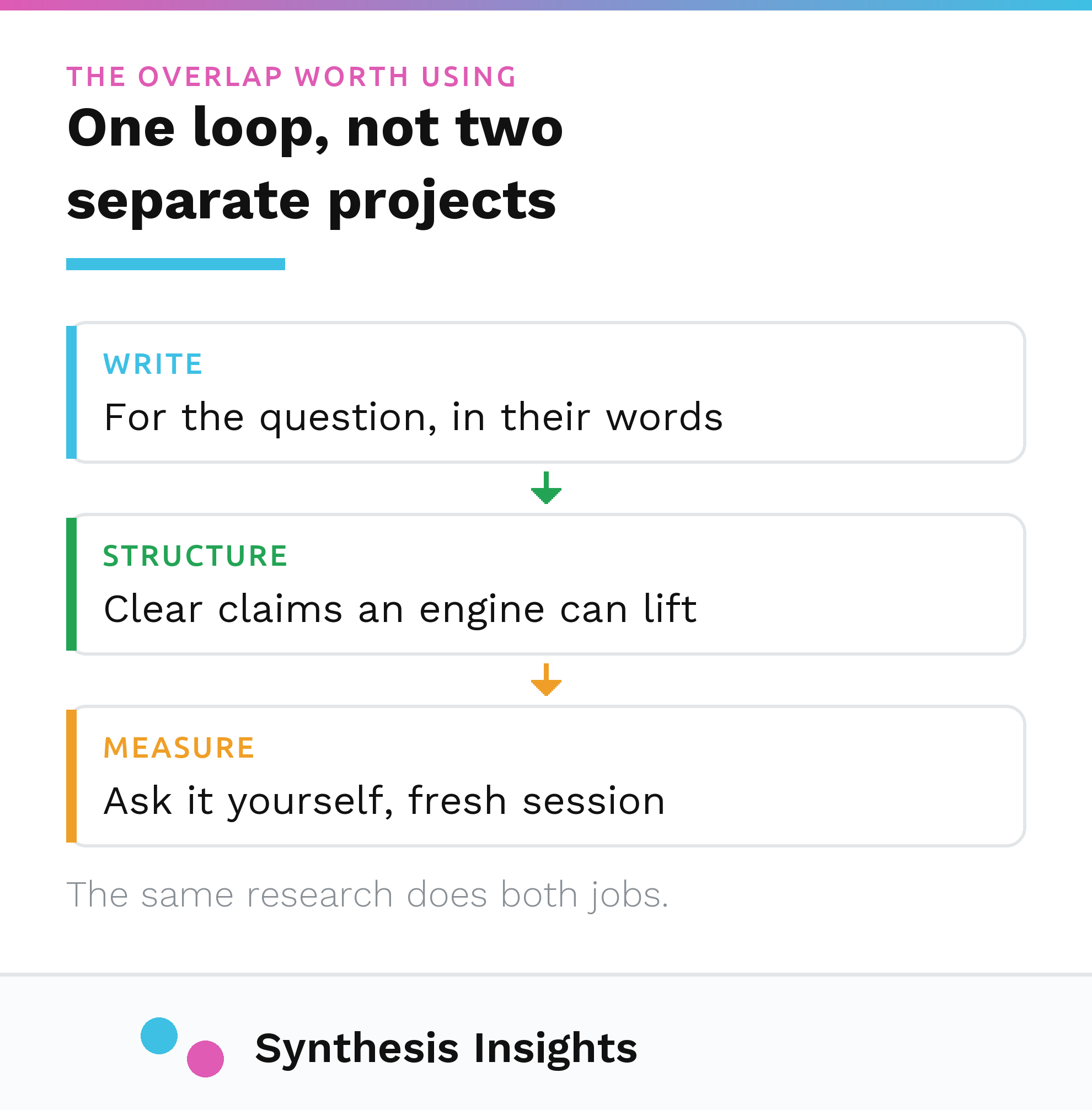
Practically, that means:
- Write for the actual question, in the buyer's own words, not the keyword-optimized version of it. That's the same discipline good inbound content always required.
- Publish content AI engines can pull clean facts from: clear claims, specific numbers, direct answers near the top, rather than the answer buried under three paragraphs of throat-clearing.
- Periodically ask the questions yourself, in a fresh AI session, the way a buyer would, and note who comes back named and who doesn't. That's the step nothing in a standard analytics stack does for you, because it isn't a metric your own site generates. I run this as a structured audit rather than a one-off check, because a single run is a snapshot and the value is in tracking the trend.
The takeaway
Inbound marketing's promise was never really about blog posts or SEO tactics. It was about earning attention by being useful instead of buying it by being loud. That promise still stands. It just now has to survive contact with a channel that doesn't send a click back to prove it worked. Measure the part your dashboards can't see, and the rest of the inbound playbook keeps doing what it always did.
If you want to see how any of this plays out for your own process, here's how I actually run engagements, start to finish.