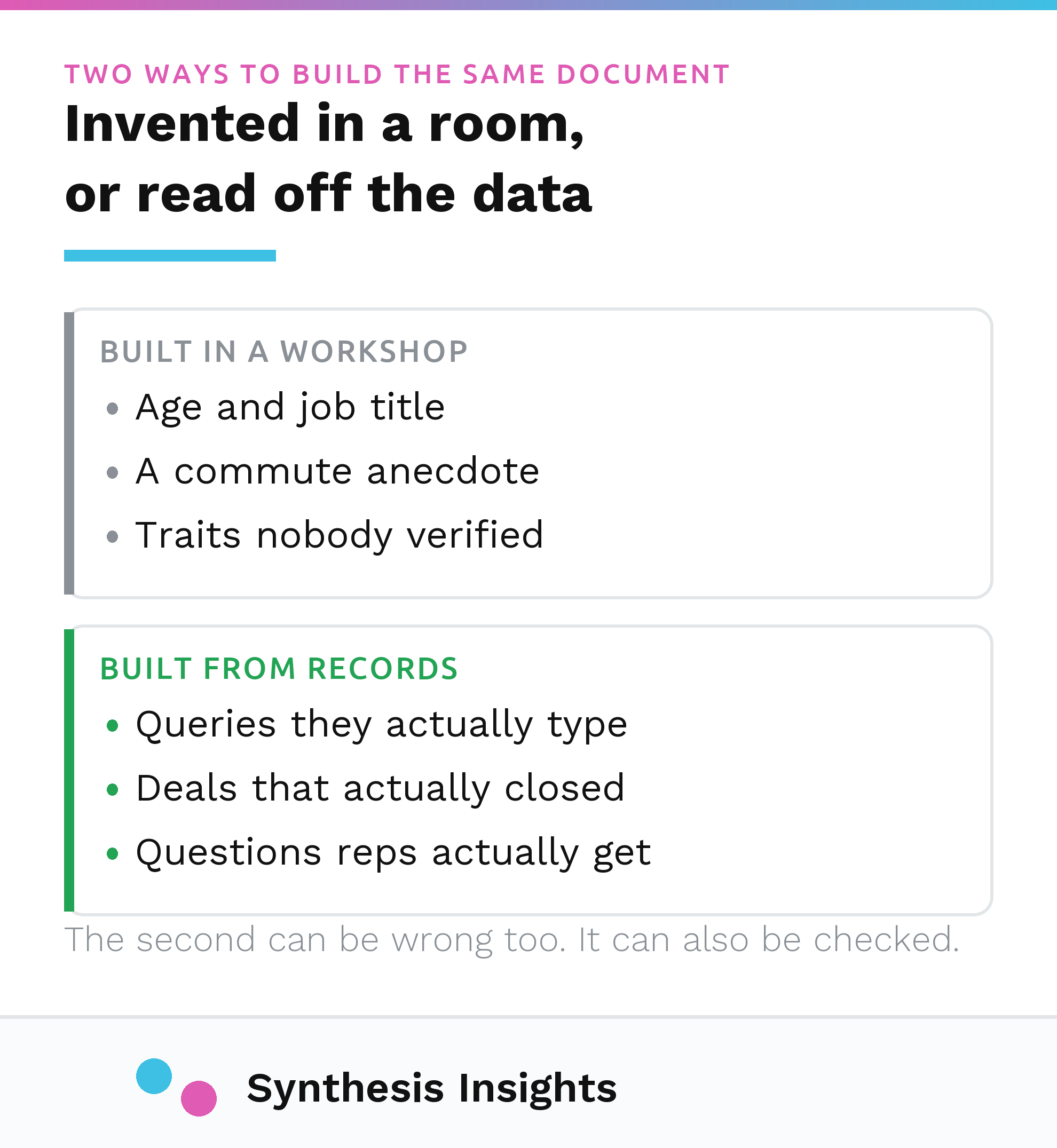
A remarkable share of B2B buyer personas get written without a single piece of evidence. Someone in a workshop decides that “Marketing Mary” is 35 to 44, checks LinkedIn on her commute, and cares about “efficiency.” Nobody asked Mary. Nobody looked at what she actually typed into Google before she found the company, or what she asked on the sales call before she signed.
I don’t think personas are useless. I think most of them are built backwards: invented first, then defended, instead of built from what buyers actually do.
Here’s a case that shows the difference. It’s the same query-first approach I use on every page rebuild, applied to a landing page for a leadership development firm. The page existed to answer a specific buyer question, but it was written from the firm’s positioning documents: the language their sales deck used, the objections their reps expected, the framing their persona work had settled on months earlier. None of that came from the people actually searching.
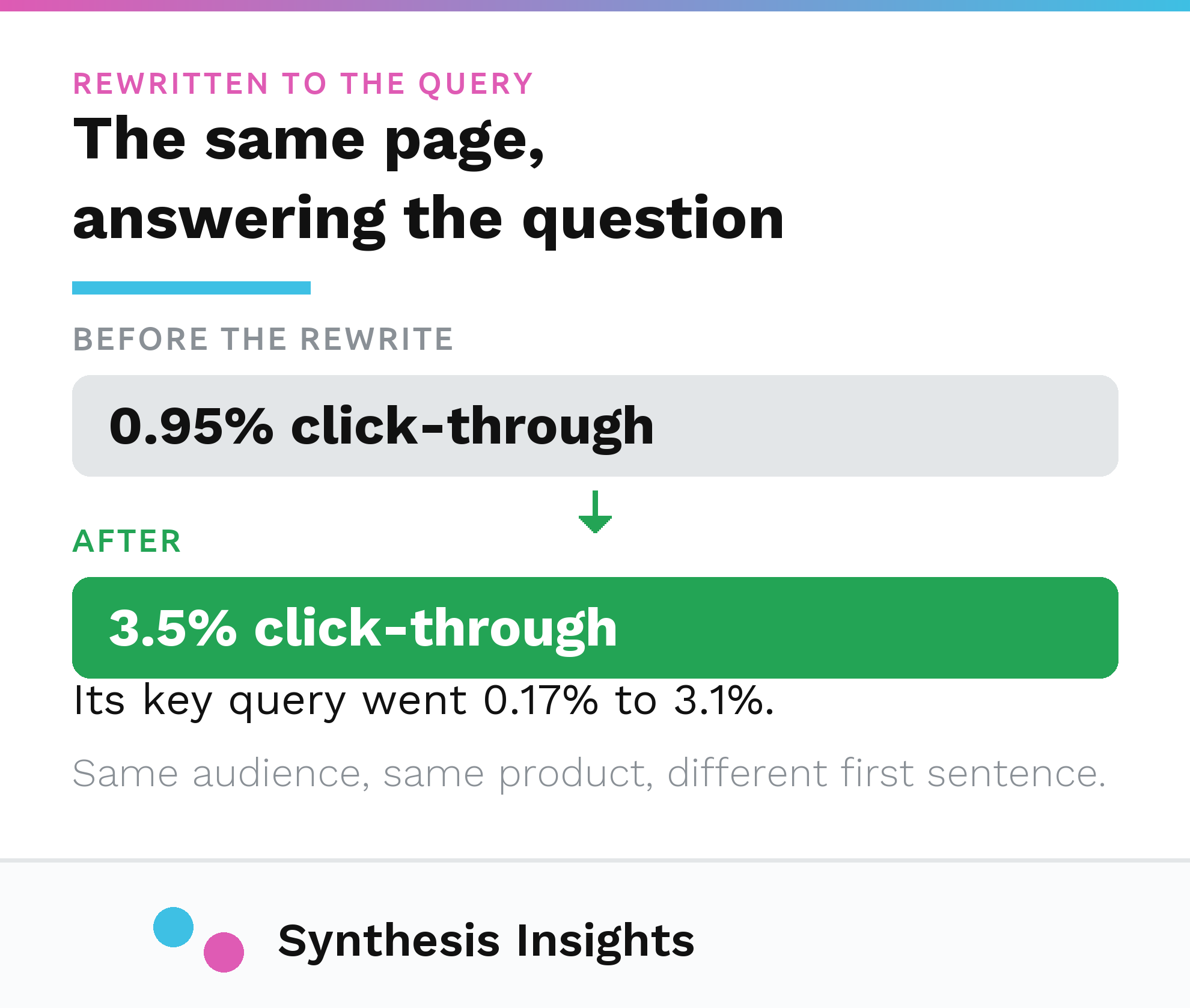
I pulled the query data instead. The page’s click-through rate was 0.95%, and its main target query converted searchers to clicks at just 0.17%. Both numbers said the same thing: people were finding the page and bouncing off the snippet without clicking, which meant the page’s own title, meta description, and FAQ content weren’t answering what the query was actually asking.
So I rewrote the page around the literal question in the query data, not the persona’s assumed concern. FAQ content addressed the specific phrasing buyers were typing. Metadata mirrored their words back to them instead of the firm’s internal vocabulary. After the fixes: click-through rate went from 0.95% to 3.5%, and the key query’s click-through rate went from 0.17% to 3.1%, roughly an 18x jump on that single query.
Nothing about the firm’s offer changed. The persona work hadn’t been wrong about who the buyer was in some abstract sense. It was wrong about what the buyer was asking, at the moment they were asking it, and that’s the part a workshop can’t see and search data can’t hide.
What a persona document usually gets wrong
The classic persona template asks for age, job title, income bracket, and which social platform someone checks first. All descriptive. None of it explains why someone clicks one search result over another, or why one sales call closes and the next one goes quiet.
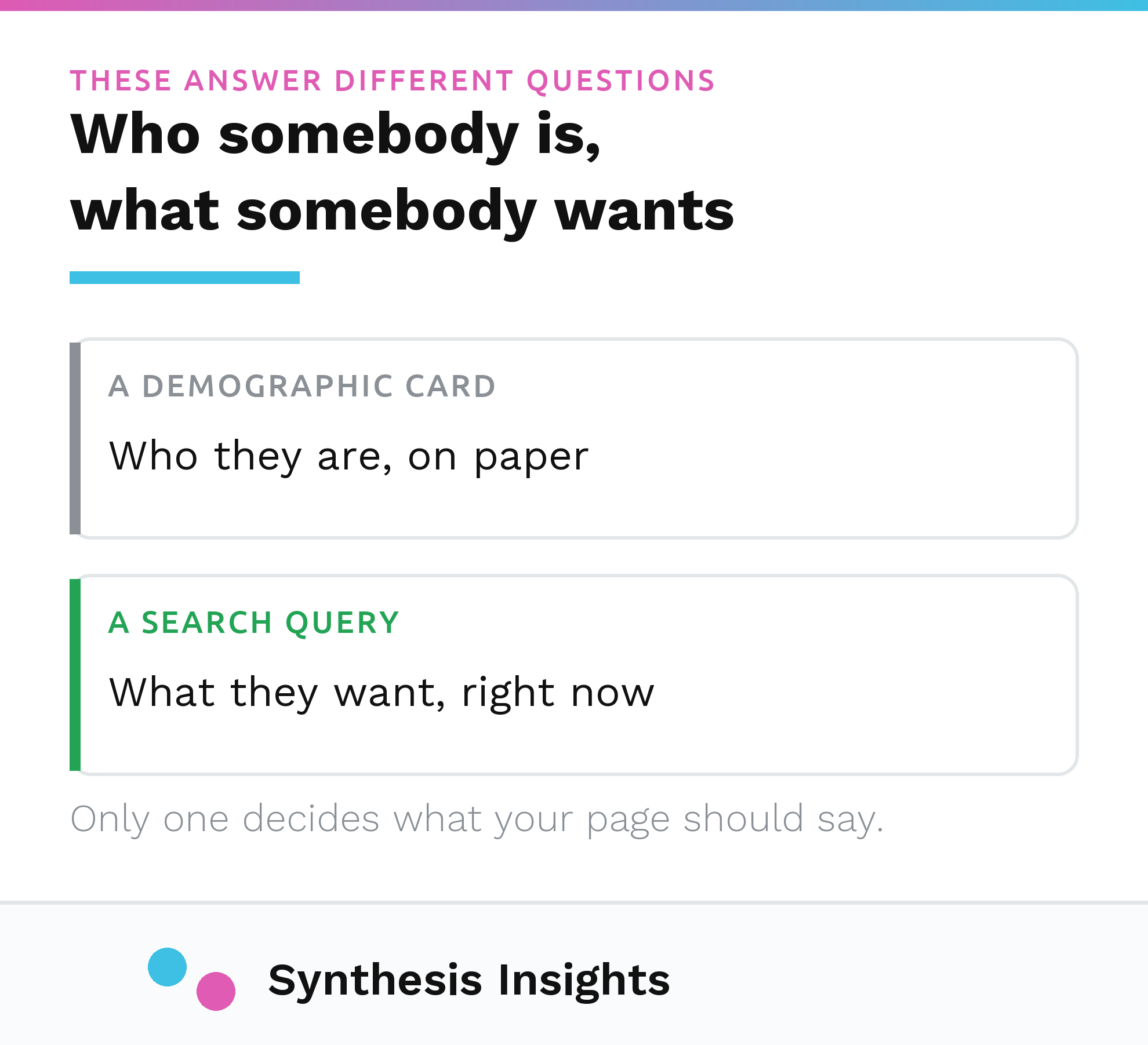
Demographics describe who somebody is. They don’t describe what somebody wants right now, which is the only thing that determines whether your page, your ad, or your rep says the right sentence at the right moment. HubSpot’s own persona research guide makes this same point from the inside of a company that sells persona tooling: the strongest personas come from customer interviews, CRM analysis, sales call feedback, and support ticket data, not assumptions about age or income. Their own definition calls a persona “a research-based profile” that is “more than demographics”: a character sketch built from behaviors, motivations, goals, and pain points rather than a row of traits.
Three sources of real signal
Search query data. Google Search Console’s own documentation defines impressions as how often a link appeared in search results and clicks as how often someone actually clicked through. Read together with click-through rate, that’s a direct read on whether your page’s promise matches the question being asked. A query with high impressions and low clicks isn’t a targeting problem, it’s a mismatch between what the searcher wants and what your title and description promise. That’s what the leadership firm’s data showed before the rewrite.
CRM records of who actually closed. Not who your team meant to sell to. Job titles, company size, and deal stage of the accounts that signed, versus the ones that went dark after a demo. If your persona says “VP of Operations” and your last twelve closed deals were signed by directors two levels down, the persona is wrong and the CRM has been saying so the whole time.
Sales call questions. What a prospect actually asks on a discovery call is close to the rawest signal you’ll get. If five calls in a row ask the same question your marketing content never addresses, that’s not a coincidence, that’s the persona document telling you it missed something.
Where this actually breaks
None of this means throw away the persona document. It means stop treating it as a one-time deliverable. I’ve watched teams write a persona in a strategy sprint, print it, and never open the file again while eighteen months of CRM data piled up contradicting it.
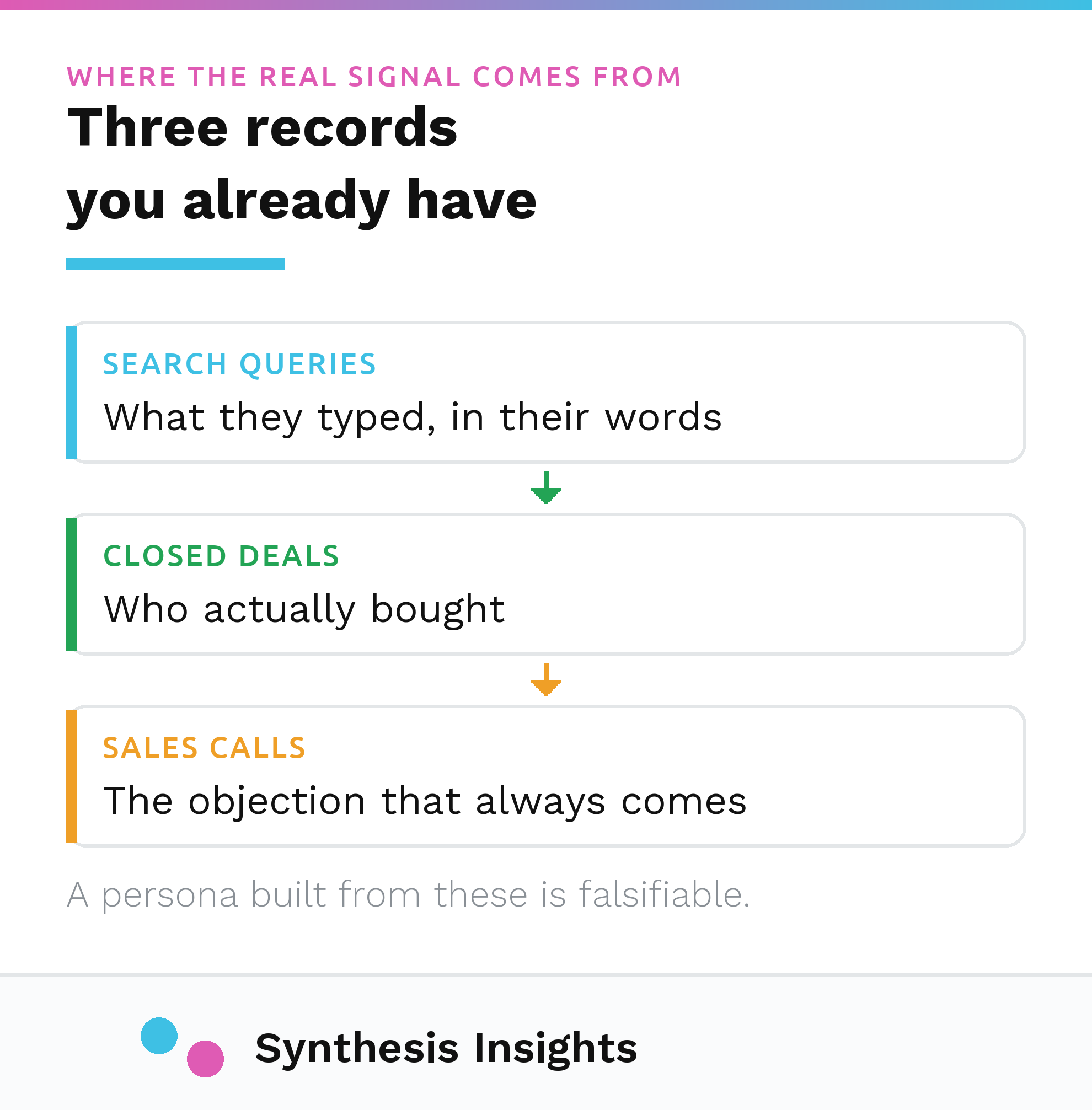
The fix isn’t more research upfront. It’s a standing habit: pull the top search queries landing on your key pages once a quarter, cross-reference against which deals from those pages actually closed, and update the persona document when the two disagree with what you assumed. That’s less exciting than a persona workshop with sticky notes. It’s also the only version that gets more accurate over time instead of staying frozen at whatever the room believed on the day it was written. A handful of the rebuilds on our results page followed this exact pattern: fix what the query data says is broken, not what the persona document assumed was broken.
If a persona document hasn’t changed in a year and your CRM has, the CRM is right. If you want a second opinion on what your own query data is telling you, get in touch.