B2B blog strategy advice almost always begins at the editorial calendar: pick topics, set a cadence, assign writers, publish on schedule. None of that matters if search engines cannot see the content you already have.
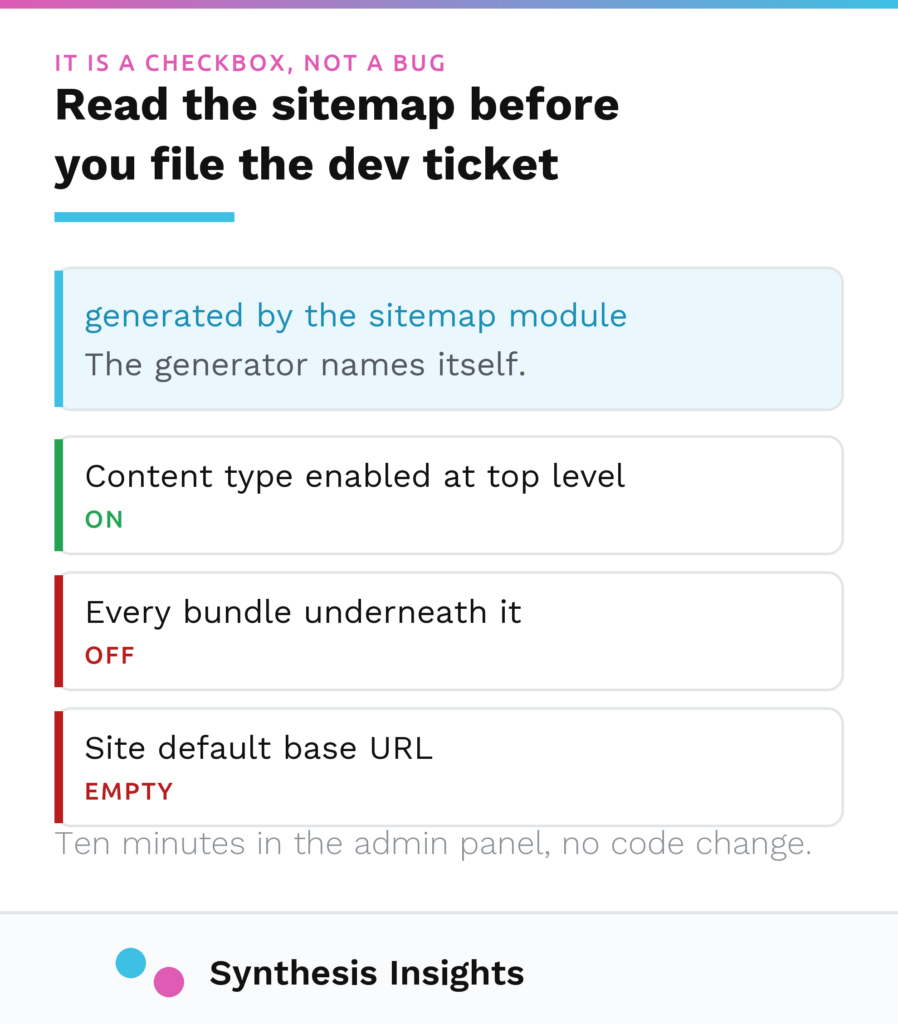
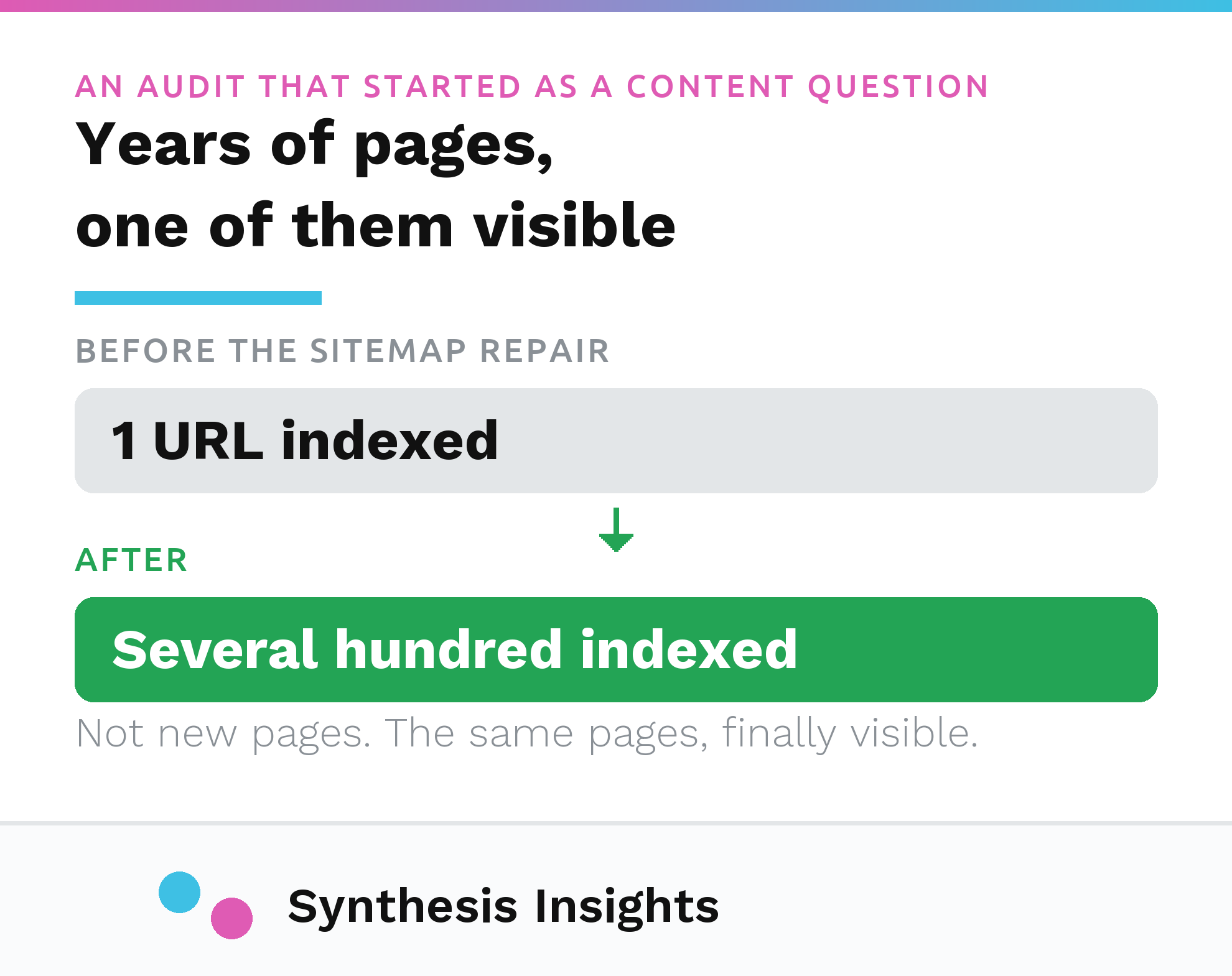
I found this out running an audit for a client, not writing a blog post about it. The client is a design and architecture firm. When I pulled their Google Search Console data, exactly one URL on their entire site was indexed. They had years of project pages, service pages, and blog posts, and Google could see a single page of it. The sitemap was broken, quietly, for long enough that nobody noticed until we went looking.
That single fact made every other conversation about their content strategy irrelevant. It did not matter whether their blog posts were 800 words or 2,000. It did not matter how often they published. A publishing calendar for content nobody can find is a calendar for content that does not exist, as far as search is concerned.
Indexing is not a technical footnote, it’s the prerequisite
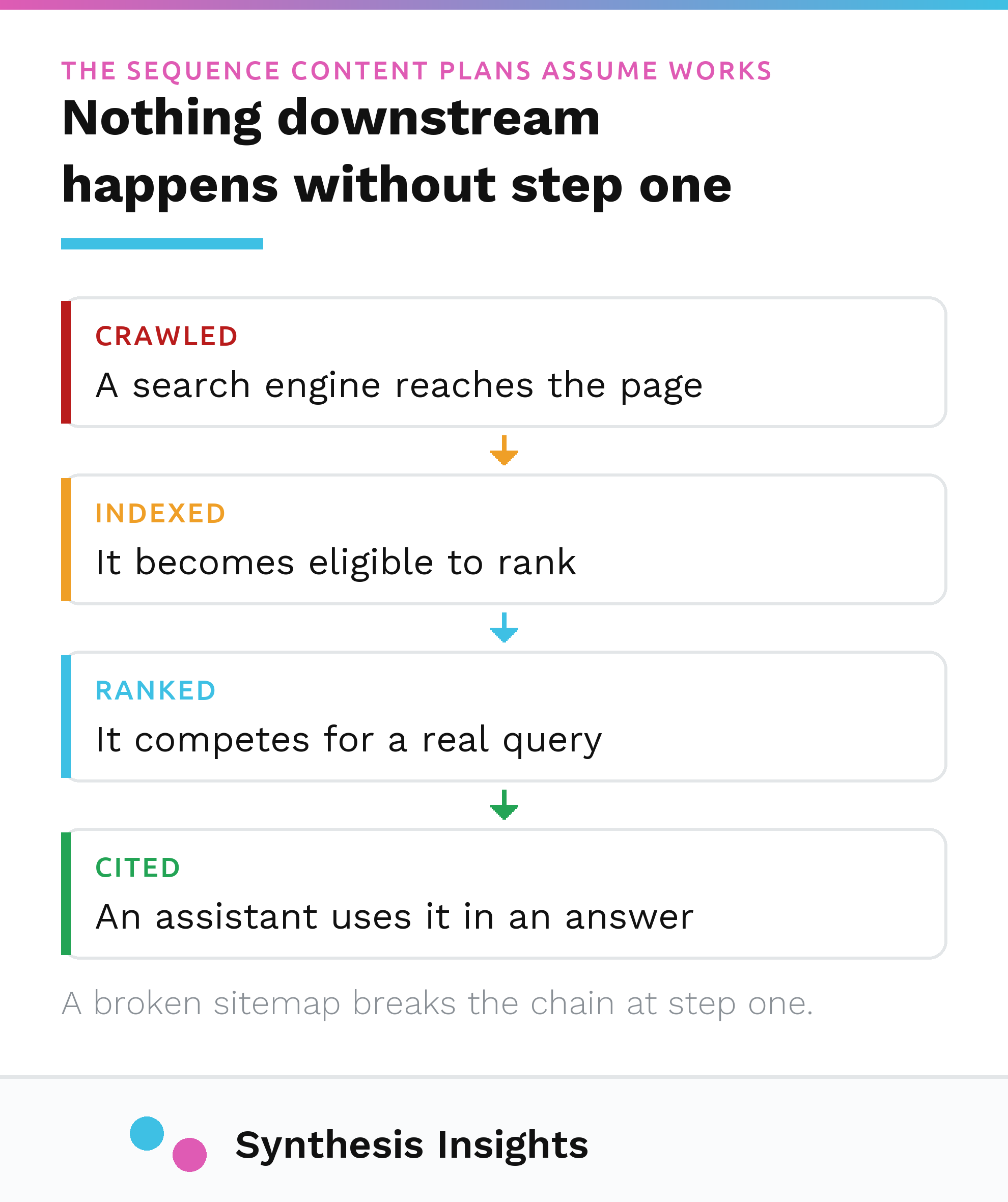
Here is the sequence most B2B blog strategy guides skip: a page has to be crawled, then indexed, before it can rank for anything, get shared, or get cited by an AI assistant answering a buyer’s question. Content strategy assumes that pipeline already works. On a lot of B2B sites, it doesn’t.
Google’s own documentation on sitemaps is blunt about how little a sitemap guarantees: “submitting a sitemap is merely a hint: it doesn’t guarantee that Google will download the sitemap or use the sitemap for crawling URLs on the site” (Google Search Central, Build and Submit a Sitemap). A sitemap is a hint even when it works. When it’s broken, as it was for the architecture firm, it stops being a hint and starts being a wall.
Google also caps how much of a site it will bother crawling in a given window, what it calls crawl budget: “the set of URLs that Google can and wants to crawl.” The same documentation warns that “if Google spends too much time crawling URLs that it shouldn’t, Google’s crawlers might not explore the rest of your site, or might not increase your crawl budget” (Google Search Central, Crawl Budget Management). Broken navigation, orphaned pages, and malformed sitemaps all waste that budget. The firm wasn’t fighting a content problem. It was fighting a plumbing problem that happened to look like a content problem from the outside.
After we fixed the sitemap, several hundred pages went from invisible to indexed. Not new pages. The same pages that had been sitting there the whole time, now visible to the thing that decides whether anyone finds them.
Check this before you plan a single topic
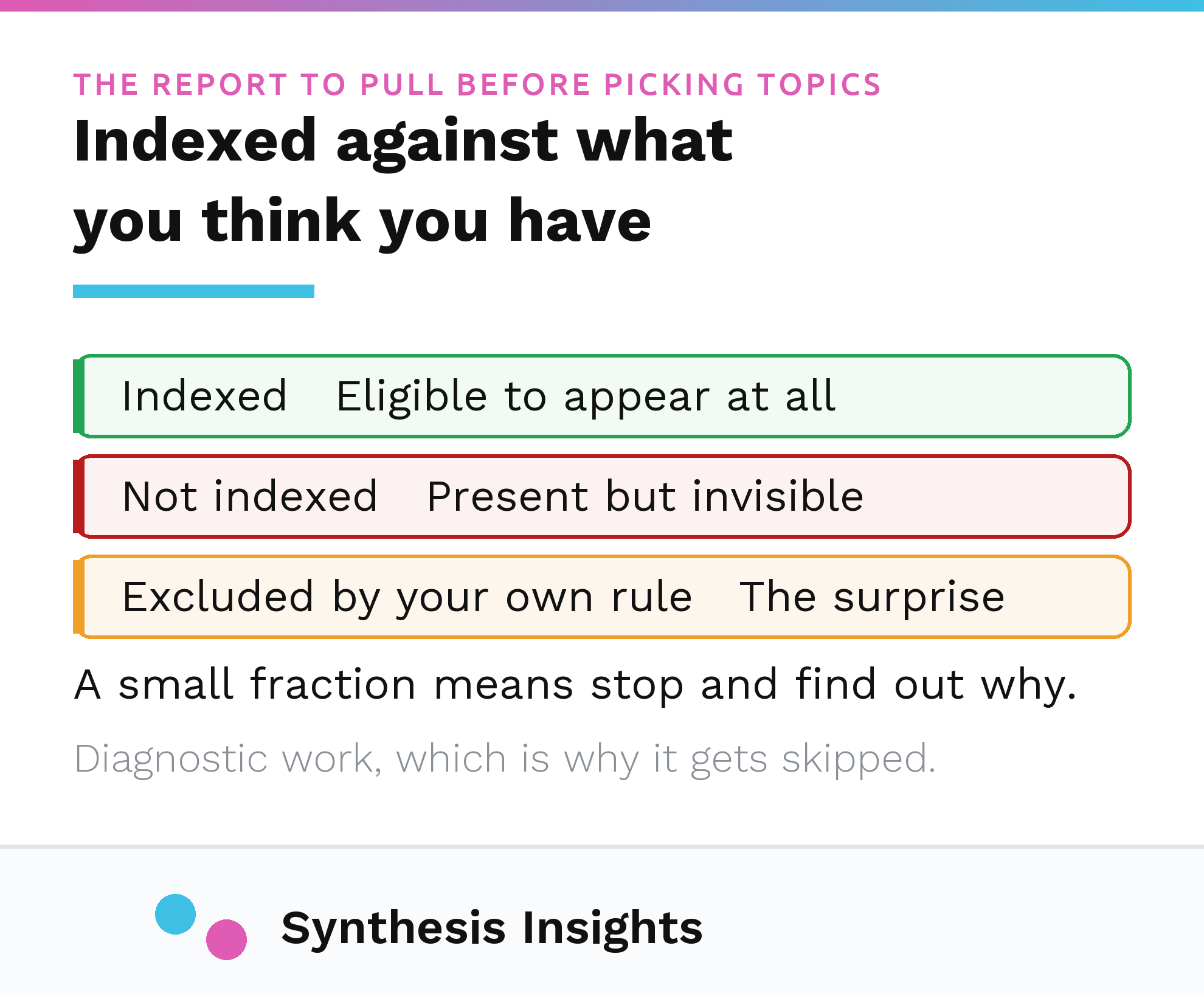
Before anyone builds a content calendar, pull the Index Coverage report in Google Search Console (or the equivalent in Bing Webmaster Tools) and check how many of your existing URLs are actually indexed against how many you think you have. If the number is a small fraction of your site, stop planning new content and go find out why. Common causes: a sitemap that references the wrong domain or a staging environment, a robots.txt file blocking more than intended, orphaned pages with no internal links pointing to them, or a redirect chain eating the crawl budget before it reaches the pages that matter. Some of those causes overlap with the more common bad SEO practices we see on B2B sites generally, which is worth a read if you haven’t audited your own setup recently.
This is diagnostic work, not creative work, and it’s the kind of thing that gets skipped because it’s less interesting than picking blog topics. It also does not require guessing. The Search Console data tells you directly whether the problem is indexing or something further down the funnel, like content that ranks but does not convert.
I check my own numbers the same way before I make any claim about what’s working. My own site’s organic search delivered roughly 110 clicks over the past 365 days, according to Search Console, and almost all of that was branded search, people who already knew to look for Synthesis Insights by name. That is not a traffic engine. It’s why this blog is written for the person a colleague forwards it to, or for an AI assistant pulling together an answer, rather than for cold organic discovery. I’d rather say that plainly than write a “grow your blog traffic 10x” post my own numbers don’t support.
Cannibalization is the other invisible failure mode
The second thing that quietly kills a B2B content plan is content competing with itself. If five blog posts all target roughly the same keyword, search engines have to guess which one to rank, and the guess is often the wrong page or none of them consistently. This shows up as “we have a lot of content and it’s not working,” which sounds like a volume problem and is actually an organization problem. Before adding a sixth post on a topic you’ve already covered, check what you already rank for and consolidate rather than compete with yourself.
Both of these failure modes, invisible indexing and self-cannibalization, are boring to diagnose and expensive to ignore. They are also why “post three to five times a month” is bad generic advice on its own. Frequency numbers detached from whether the content is indexable or differentiated just produce more content in the same broken pipeline.
What a B2B blog strategy actually needs, in order
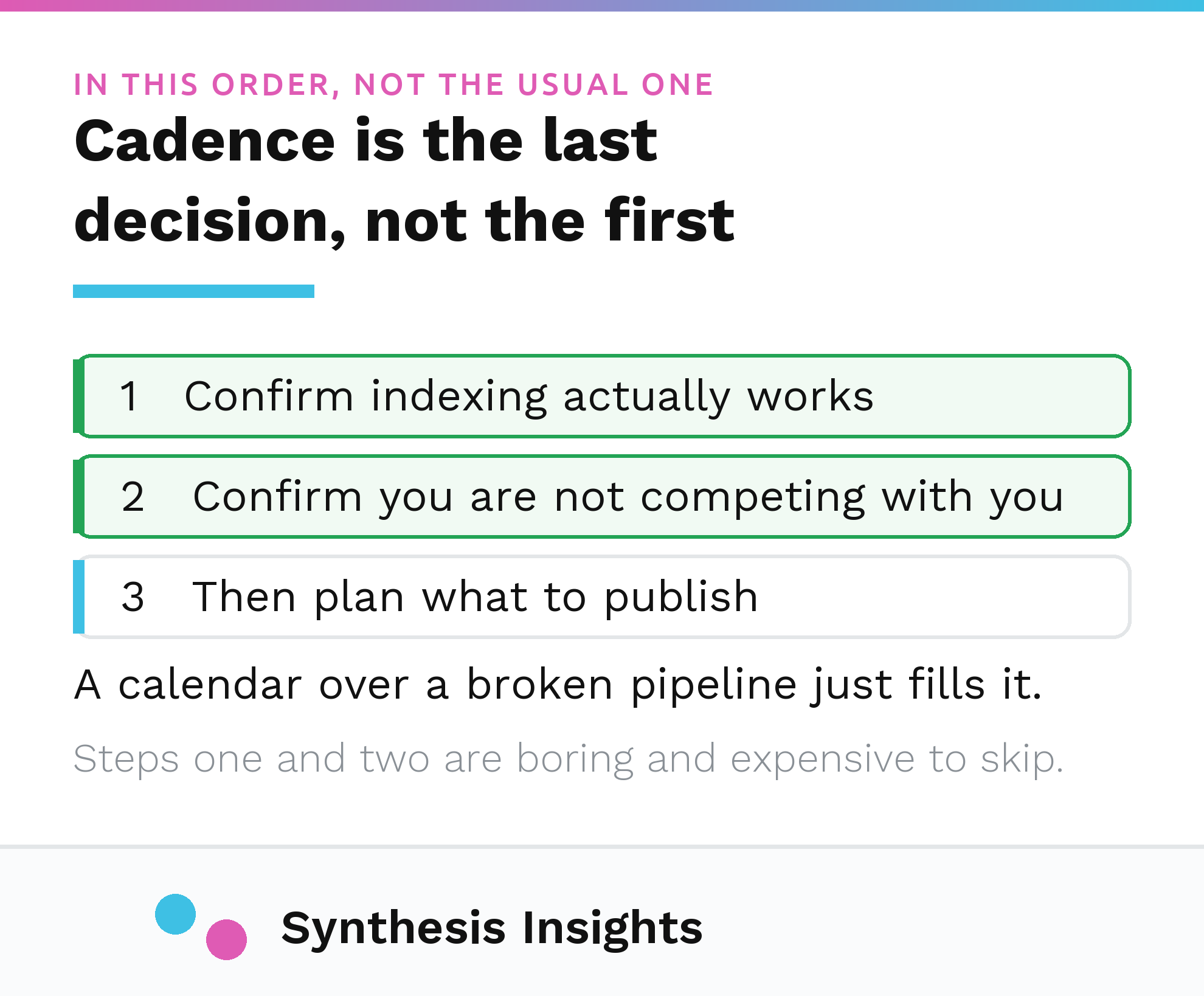
- Confirm indexing works. Pull the Index Coverage report before anything else.
- Confirm you’re not competing with your own content on the topics you’re about to write.
- Then, and only then, plan what to publish and how often.
Cadence and word count are real variables, but they are the last decision, not the first. A B2B blog strategy built on a calendar with no infrastructure check underneath it is a plan to publish content that behaves the same way the architecture firm’s did for years: present, well-written in places, and functionally invisible. Once indexing and cannibalization are handled, the metrics worth tracking are covered in what actually counts as a good SEO KPI, which is a separate question from whether the content is visible at all.
If you’re planning a content calendar right now, the fastest thing you can do this week isn’t picking topics. It’s opening Search Console and counting how many of your pages actually show up.