Almost everything written about B2B marketing channels is a taxonomy: nine channels, a paragraph of pros and cons on each, a closing line telling you to diversify. That answers a question nobody asked. The question a marketing budget actually has to answer is which channels produce customers for this specific business, and a list of channel descriptions cannot tell you that. Your own numbers can, if you're measuring the right thing.
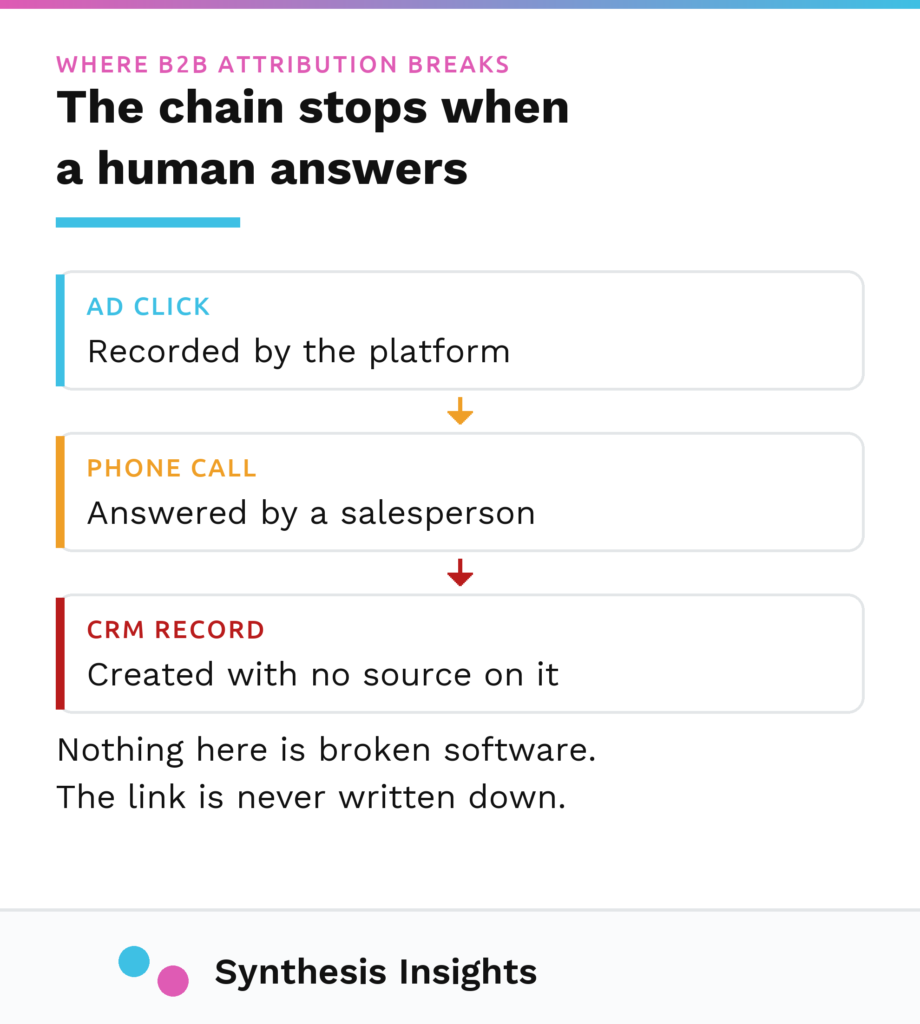
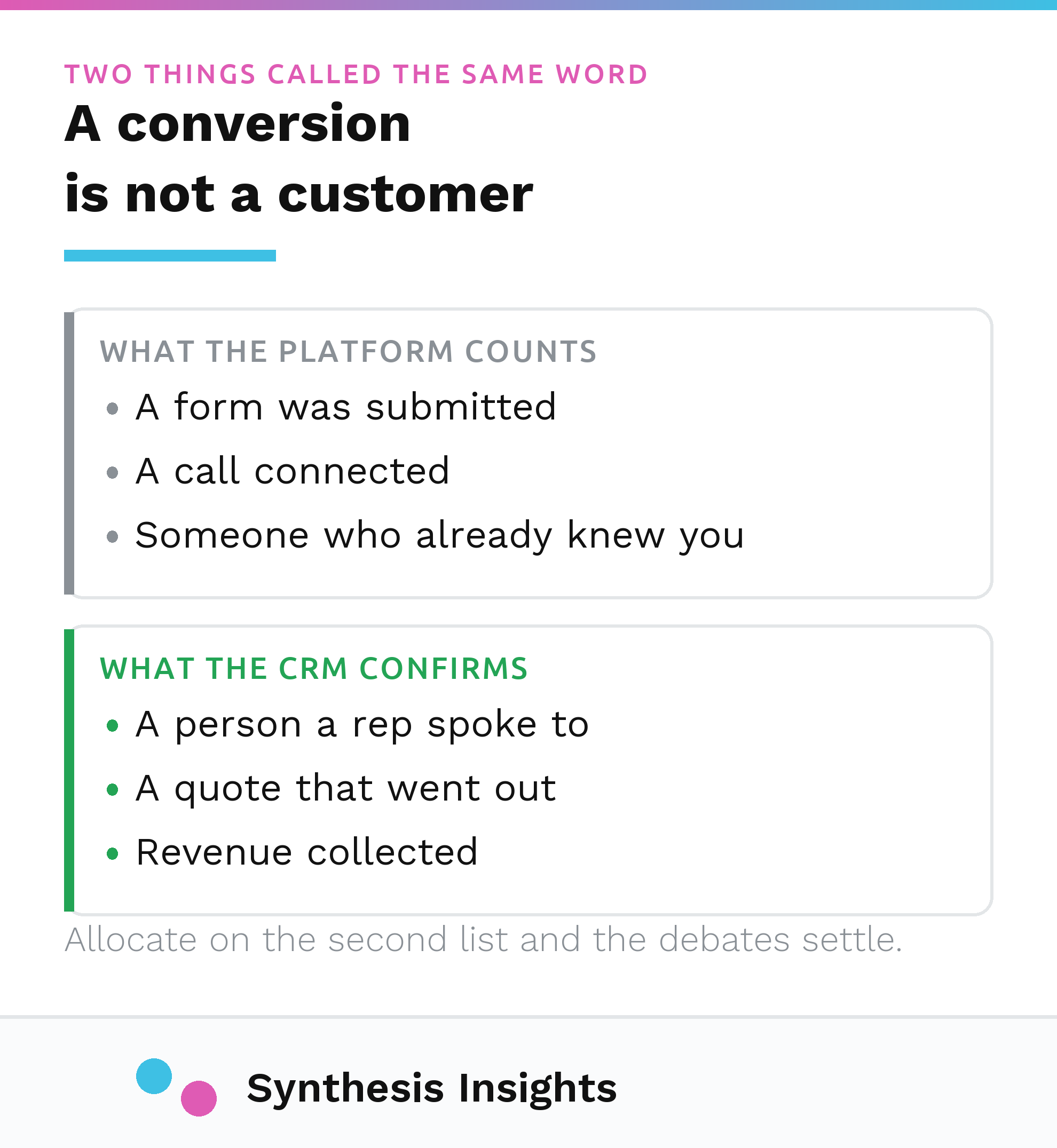
I learned how badly that question gets missed on an industrial manufacturer's account I run. Spend was climbing every quarter and the platform dashboards looked fine: healthy click-through rates, conversions ticking up, cost per conversion holding roughly steady. None of that told anyone which campaigns were producing customers, because a conversion recorded inside an ad account and a customer showing up in the business are not automatically the same event.
Nobody on that account could say which segments were actually earning their share of the budget. Nobody could defend the spend if someone above them asked why it kept growing. That is the position channel allocation puts you in when it runs on platform reporting and never gets checked against what the CRM says actually closed.
The fix wasn't a new channel
The fix was rebuilding the segmentation around what the CRM said was closing. That meant pulling every campaign's leads out of the ad accounts and matching them against the CRM's closed-deal records, so the platform's own conversion count stopped being the thing anyone acted on.
On this account specifically, some segments with a low, healthy-looking cost per conversion in the dashboard were not the same segments closing deals in the CRM. Cutting the ones that weren't converting and moving that budget into the ones that were is the whole strategy. It required no new channel and no bigger budget, only accurate information about which dollars were already producing customers, applied to where the next dollar went. Reporting for the account changed too: from clicks and platform-defined conversions to closed deals and cost per acquired customer.
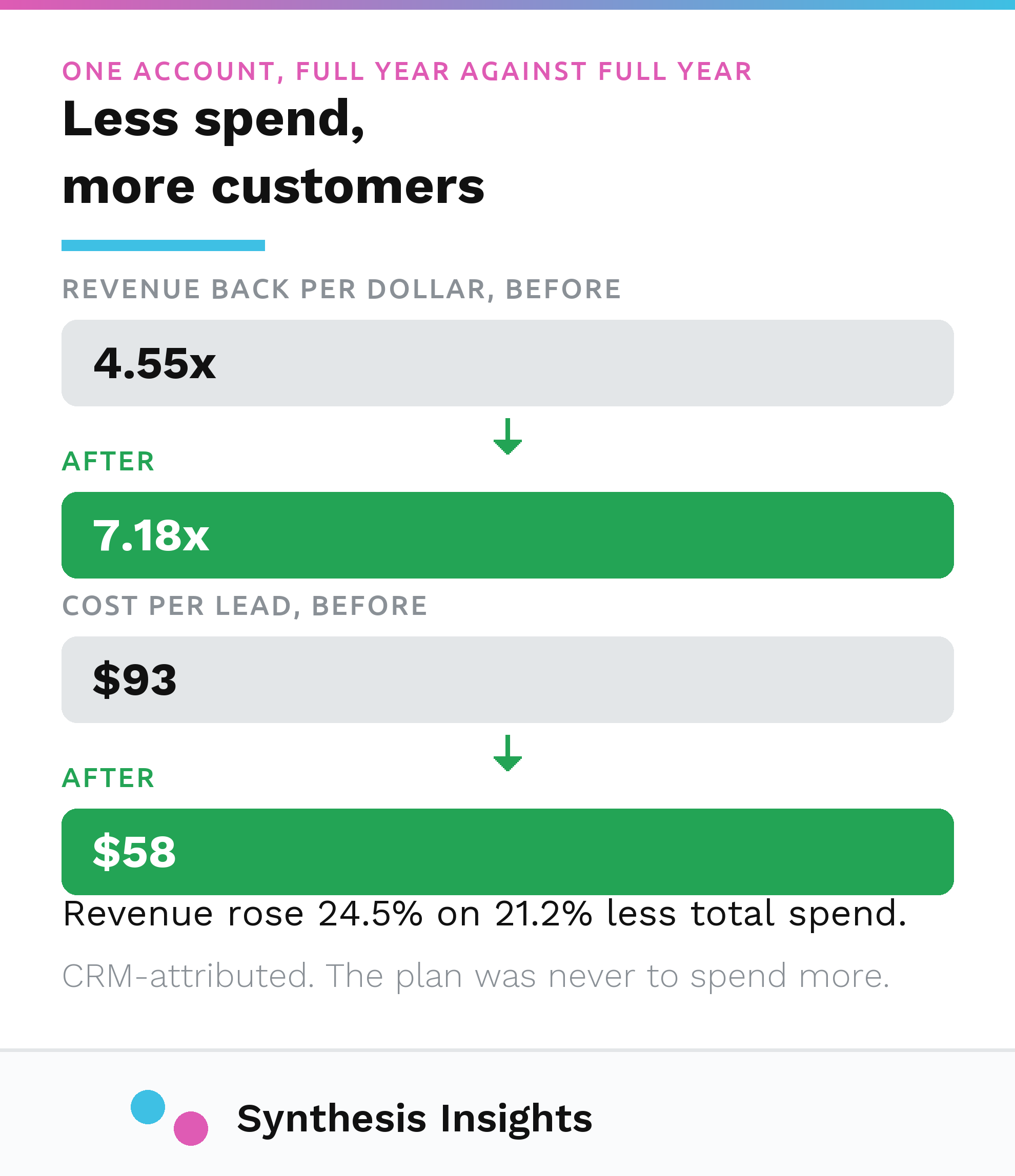
Measured against the prior full year, CRM-attributed: blended return on ad spend went from 4.55x to 7.18x. Paid-media revenue rose 24.5% on 21.2% less total spend. Cost per lead fell from $93 to $58. Cost per acquired customer fell 45.4%. The plan going into that year was never to spend more. It worked because money already being spent got redirected toward what was actually closing. (The full breakdown of this account, and others, with the measurement method disclosed, is on the results page.)
Why the platform's own number was the problem
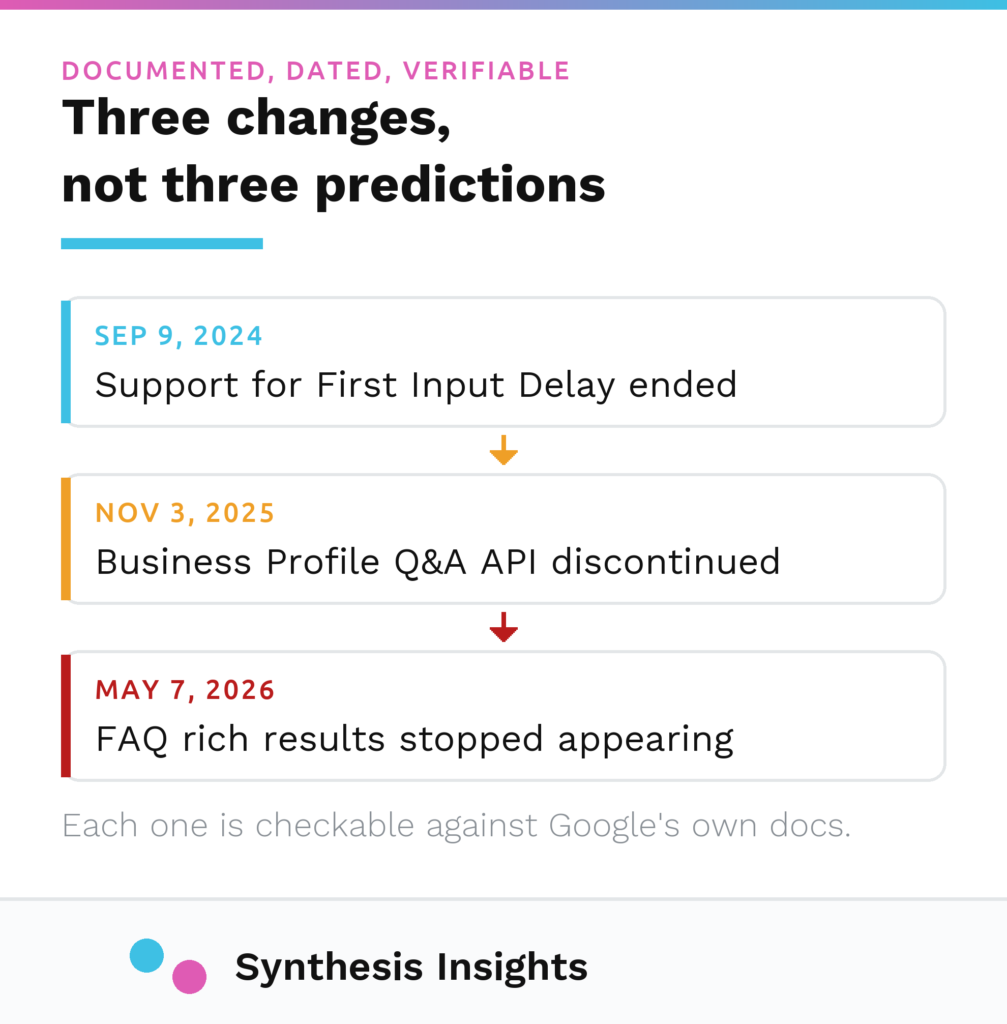
None of this means the account was badly run. It is what happens when a platform's definition of a conversion gets treated as equivalent to a sale. Google says as much in its own documentation on modeled online conversions: "Without modeling, reported conversions would only reflect the observable portion of conversions rather than the true campaign performance." Read that carefully. Google is telling advertisers, in its own help center, that the raw number is already an undercount before any modeling patches it back up. A conversion inside an ad account is an estimate of engagement with an ad. It was never a verified fact about your pipeline, and the platform says so directly.
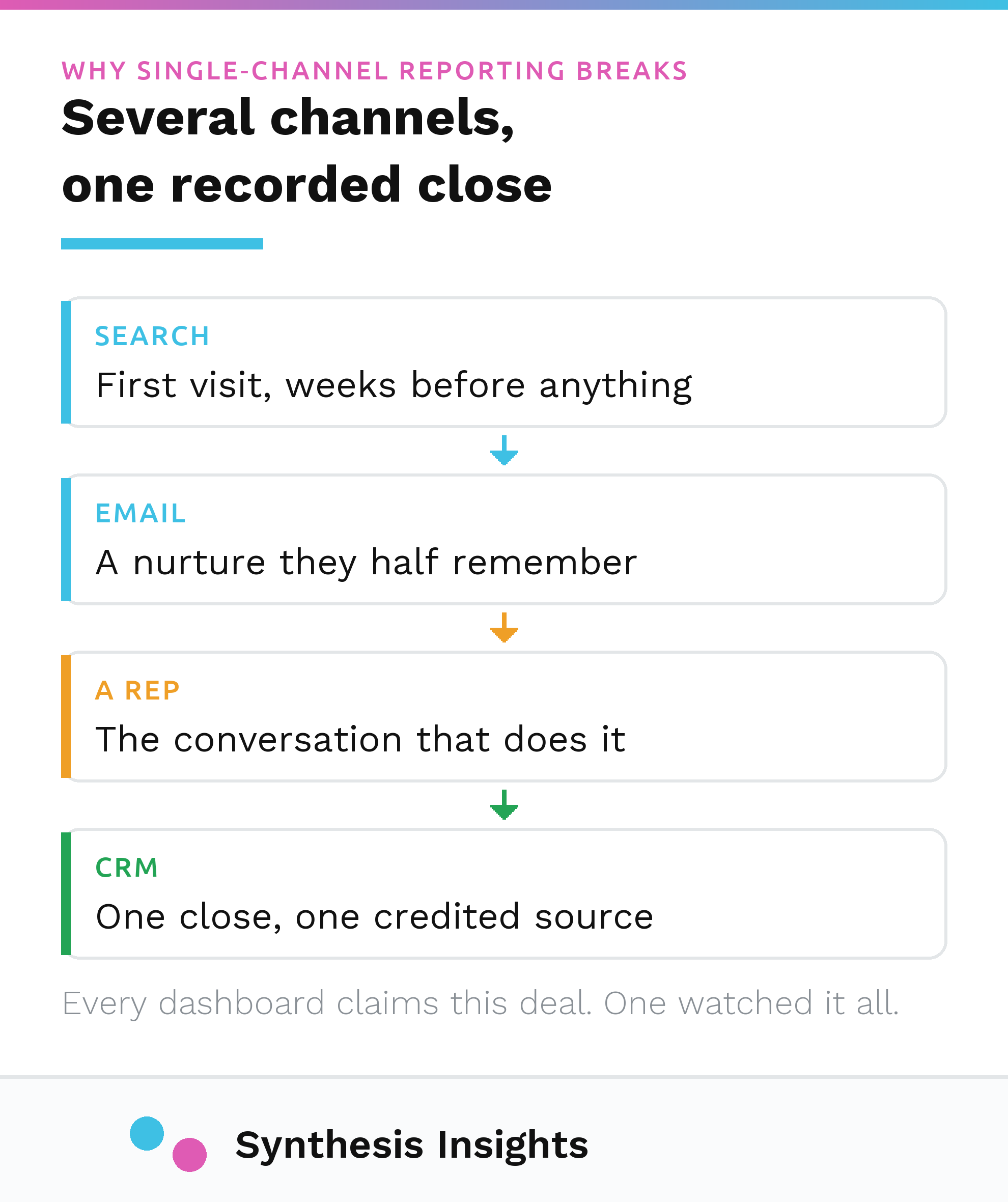
There's a second reason single-channel reporting compounds the problem in B2B specifically: the buyer usually isn't moving through one channel at a time. A prospect reads a comparison page, sits on it for a month, gets an email, then calls a rep. This part is inference on my side, since I have not measured it across enough accounts to claim it as a finding, but if the channels that move a deal forward are working together, no single platform's dashboard was ever going to show you which one produced the customer. That is a structural reason to stop asking which channel deserves credit and start asking which combination of spend produced revenue the CRM can confirm.
How I allocate a B2B budget by what closes
This is the method I run on every paid media account now, not just the one above. It's practice, not a second case study.
Connect the CRM to the ad accounts, not the other way around. Every lead needs a path back to the campaign or channel that sourced it, and every closed deal needs to trace back the same way, or the segmentation work above is impossible to repeat.
Report each segment on two numbers: closed deals and cost per acquired customer. Cost per lead and cost per platform conversion are fine for pacing spend day to day. They are the wrong numbers to decide where a dollar goes next, because they measure activity the platform can see and say nothing about revenue the business can bank.
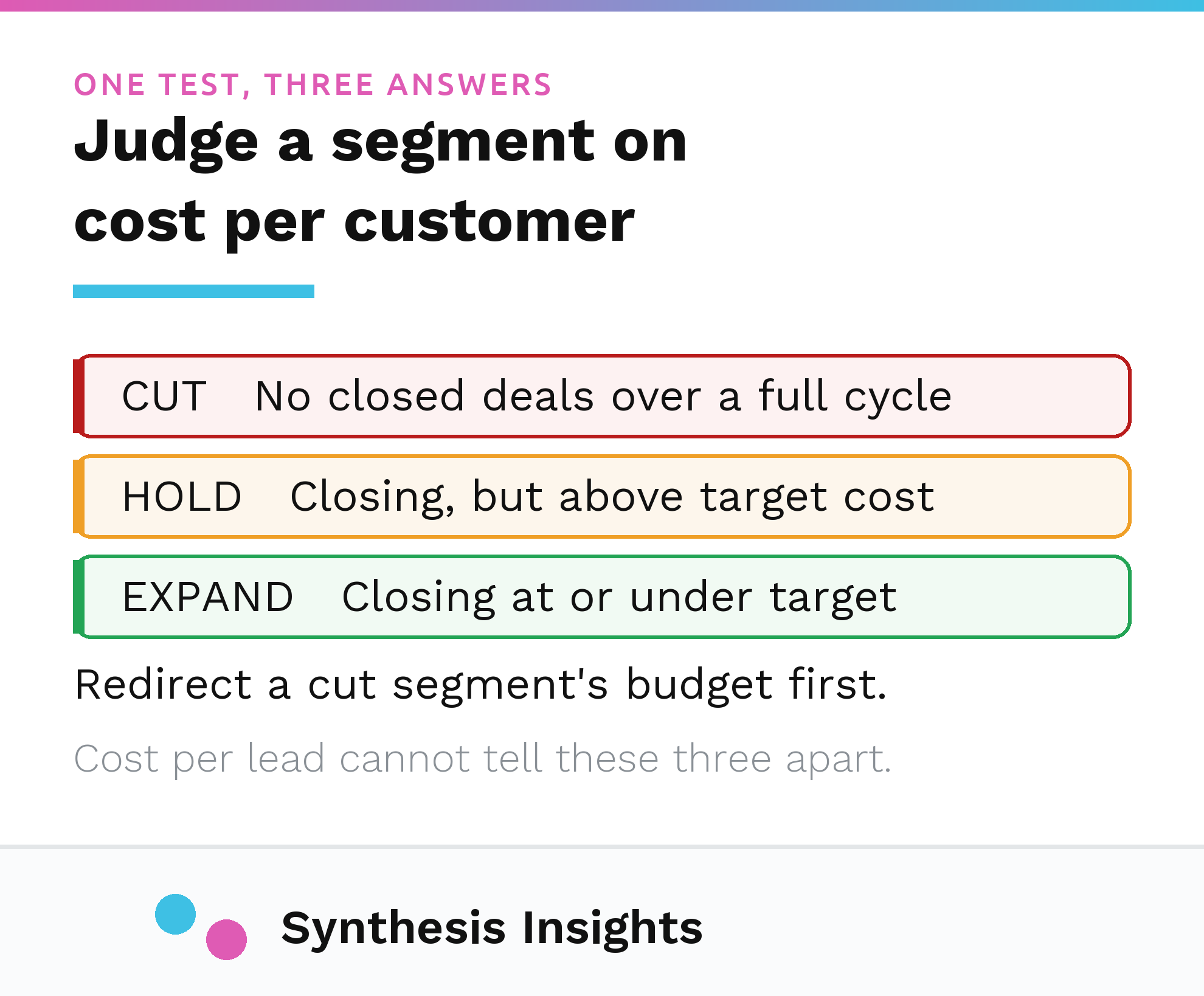
Set a review window long enough to see a close, not a click. A considered B2B sale can take months between first touch and signed deal, so judging a channel's worth on a 30-day window will cut segments that hadn't finished converting yet, which is a slower and quieter version of the exact mistake above.
When a segment gets cut, redirect its budget before touching total spend. The instinct when a segment underperforms is to add more money and see if it improves. The money already assigned to it is the money that should move, first.
The taxonomy was never the point
Channel allocation isn't a taxonomy problem. It's a measurement problem dressed up as one. Nine channels with pros and cons attached will always feel like useful information, and none of it tells you where next quarter's budget should go. The account that finally told me where its budget should go was the one that stopped letting the ad platforms grade their own homework.
If your dashboards look healthy and you still can't say which channel is producing customers, that's worth a conversation. The first 30 days of how I'd approach it are laid out on the how we work page, and you can book a call directly if you want to talk through your own account. This is the same discipline behind every account I run through paid media management.